Breast uplift scars: what to expect
Where breast uplift scars sit, how they change over the first year, and what you can do to help them heal well.

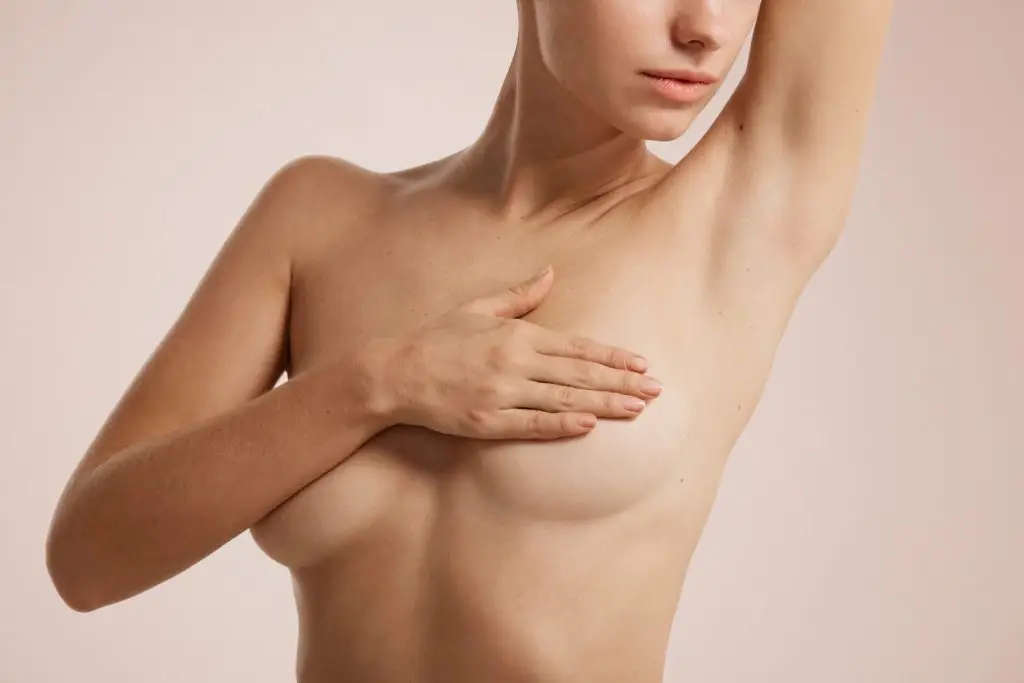
The short answer: every breast uplift leaves scars, because lifting the breast means removing skin. How much scarring depends on how much lift you need. The scars are usually red or pink for the first few months, then slowly fade over six to twelve months. Most sit where a bra or bikini covers them.
I would rather be completely upfront about scars at a first consultation than have anyone surprised afterwards. For most of my patients, the improvement in shape is worth it, but it is a trade-off you should go into with your eyes open.
Where the scars go
There are three common patterns. Which one you need depends mainly on how low the breast and nipple sit, and how much loose skin there is.
- Around the areola only. For a small lift. The scar sits at the edge of the areola, where the colour changes, which helps hide it.
- Around the areola and straight down. Often called a lollipop or vertical scar. This suits a moderate lift and gives more control over shape.
- Around the areola, down, and along the fold underneath. Often called an anchor scar. This is for larger lifts with more loose skin. The horizontal part sits in the crease under the breast.
It is tempting to ask for the smallest scar possible. But using too small a pattern for the amount of lift you need can give a flatter shape, or a result that does not last as well. I will recommend the pattern that gives you the best shape, and explain why.
How the scars change over time
- The first few weeks: the scars are pink or red and may feel slightly firm. Wound checks continue during this time.
- Two to six months: it is common for scars to look their most noticeable around now, sometimes a little raised or darker. This is part of normal healing, not a sign that something has gone wrong.
- Six to twelve months: the scars soften, flatten and fade, gradually becoming pale lines. The breast shape settles over the same period.
What helps scars heal well
- Not smoking. Smoking slows wound healing and makes problems with the scar more likely.
- Wearing your support bra. It reduces tension on the scars while they heal.
- Silicone gel or sheets. Once the wounds have fully healed, silicone helps many scars settle. I will tell you when to start.
- Keeping them out of the sun. New scars can darken permanently in sunlight. Cover them, or use a high-factor sunscreen, for the first year.
- Patience. Scars take a full year to mature. Judging them at three months is too early.
Who is more likely to have thicker scars
Some people form thicker, raised scars, called hypertrophic or keloid scars. This can run in families and is more common in darker skin types. If you have had a thick scar before, please tell me, as it helps me plan your surgery and aftercare. If a scar does not settle well, treatments such as scar correction can help.
Other things to know
A breast uplift takes around two and a half hours under general anaesthetic, with one night in hospital. Most people are back at desk work in one to two weeks. Changes in nipple sensation can happen. The lift lasts many years, but pregnancy, weight change and age will continue to affect the breasts, so it is usually best to wait until you have finished having children.
You can read more on my breast uplift page.

Mr Siva Kumar Veeramani
MBBS, BMed.Sci (Hons), MRCS, MBA, FRCS (Plast.). Consultant Plastic, Reconstructive & Cosmetic Surgeon practising across London, Kent, Surrey and Sussex. GMC 6114710.
About Mr Siva Kumar →