BCC vs SCC: what is the difference between these skin cancers?
How basal cell carcinoma and squamous cell carcinoma differ: what each looks like, which is more serious, how quickly they grow, how they are treated, and when to get a spot checked.

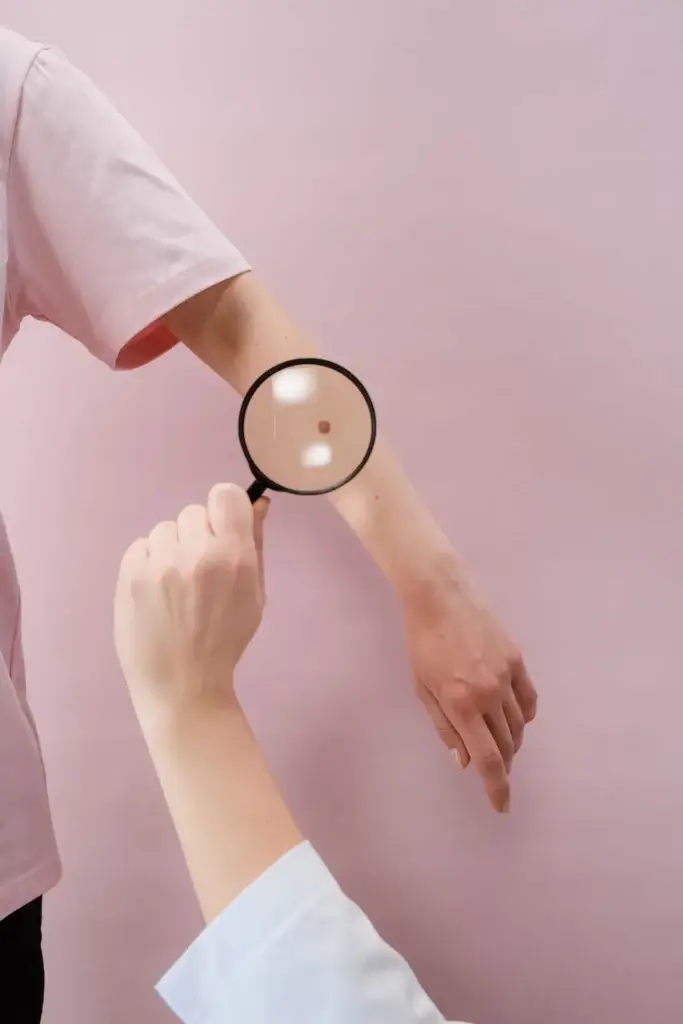
The short answer: the key difference in BCC vs SCC is how likely each is to spread. Basal cell carcinoma (BCC) is the most common skin cancer. It grows slowly and very rarely spreads, but it needs treating because it keeps growing and can damage the skin around it. Squamous cell carcinoma (SCC) is the second most common. It can grow more quickly and is more likely than a BCC to spread, so it needs prompt treatment. Both are usually cured with surgery, often under local anaesthetic.
Patients often tell me they were relieved to hear it was “only a BCC”. That is a fair reaction, as BCCs are rarely dangerous. But neither of these should be ignored, and understanding the difference helps you know how quickly to act. Together they are known as non-melanoma skin cancers, and they are by far the most common cancers in the UK.
“Most of the skin cancers I treat are found early, removed in one straightforward procedure, and never cause another problem. The ones that cause real difficulty are almost always the ones that were left too long.”
Mr Siva Kumar, Consultant Plastic Surgeon
BCC vs SCC at a glance
| Basal cell carcinoma (BCC) | Squamous cell carcinoma (SCC) | |
|---|---|---|
| How common | Most common, around three in four non-melanoma skin cancers | Second most common, around one in five |
| Starts in | Basal cells, at the bottom of the outer layer of skin | Squamous cells, higher up in the outer layer |
| Growth | Slow, over months to years | Faster, over weeks to months |
| Typical look | Pearly or shiny pink lump, rolled edge, small blood vessels, or a sore that keeps healing and breaking down | Firm, scaly or crusted lump, sometimes tender, may form an open sore |
| Spread | Very rarely spreads | Can spread, usually to nearby lymph nodes, but most are cured by surgery |
| Early warning signs | None usually | Often grows from rough, scaly sun damage (actinic keratosis) or Bowen’s disease |
| How urgently to be seen | Soon, but not usually an emergency | Urgently, ideally within two weeks |
Where do these skin cancers start?
The outer layer of your skin, the epidermis, is made of layers of cells. At the bottom are the basal cells, which keep dividing to make new skin. As they move up towards the surface, they flatten into squamous cells. Scattered along the bottom layer are melanocytes, the cells that make pigment. Each of the three main skin cancers starts in a different one of these cells.
Because they start in different cells, a BCC or SCC cannot turn into a melanoma. Melanoma is a separate and usually more serious type of skin cancer, which I have written about in my guide to mole checks and when to worry.
What does a basal cell carcinoma look like?
Every skin cancer is different, and only an examination, usually with a dermatoscope, can tell them apart. But there are typical patterns. A BCC often looks like:
- a pearly or shiny pink lump, sometimes with small visible blood vessels on the surface (nodular BCC)
- a lump with a raised, rolled edge and a dip or crust in the middle
- a sore that bleeds, scabs and seems to heal, then comes back, often first noticed when it bleeds after washing or drying the face
- a flat, red, scaly patch, often on the back or chest, that can look like eczema (superficial BCC)
- a pale, waxy, scar-like area with poorly defined edges (morphoeic or infiltrative BCC), which can spread further under the skin than it appears
BCCs are usually painless, although some itch. They grow slowly, over months or years.
What does a squamous cell carcinoma look like?
An SCC often looks like a firm, scaly or crusted lump that may be tender to touch. It can grow more quickly, over weeks to months, sometimes forming a horn of hard skin on top, or an open sore. One type, called a keratoacanthoma, grows very quickly over a few weeks into a dome with a crater in the middle, and is usually treated in the same way as an SCC.
SCCs often develop from areas of long-term sun damage. Rough, scaly patches called actinic keratoses can occasionally turn into SCC, and Bowen’s disease, a red scaly patch, is an early form of SCC confined to the top layer of skin. Both are worth having treated.
Both BCC and SCC are most common on sun-exposed skin: the face, ears, scalp, neck, backs of the hands and lower legs. SCC is particularly common on the ears, lower lip and bald scalp.
Is BCC or SCC more serious?
SCC is generally more serious, because it is more likely to spread. But both are very treatable.
BCC very rarely spreads to other parts of the body. The concern is local. Left alone, it slowly grows and can damage the surrounding skin and tissue, which matters a great deal on the face, near the eye, nose or ear. A neglected BCC can become large and difficult to treat, but deaths from BCC are extremely rare.
SCC can spread, most often to nearby lymph nodes. Most SCCs, perhaps 95 in 100, are cured by surgery when treated promptly. The risk of spread is higher if the SCC is large or deep, is on the ear or lip, has grown along a nerve, or if your immune system is weakened, for example after an organ transplant. If it has spread, further treatment is planned with the specialist skin cancer team.
“I tell people a BCC is a slow problem and an SCC is a quicker one. Neither is a reason to panic, but an SCC is a reason not to wait.”
Mr Siva Kumar, Consultant Plastic Surgeon
How long can a BCC be left untreated?
A BCC is not usually an emergency, and waiting a few weeks for an appointment rarely makes a difference. But it will not go away on its own, and the longer it grows, the bigger the operation and the scar. On the face, especially near the eyes, nose, lips or ears, I always recommend treating it sooner rather than later. An SCC should be seen urgently, as it can grow over weeks. In the NHS, suspected SCCs are referred on the urgent suspected cancer pathway, while most suspected BCCs are referred routinely.
Who is at higher risk?
- People with a lot of sun exposure over their lifetime, especially outdoor workers and keen gardeners, golfers or sailors
- Fair skin that burns easily, red or fair hair, and light-coloured eyes
- A history of sunburn, especially in childhood, and previous sunbed use
- Older age, as the risk rises steadily after 50
- A weakened immune system, for example after an organ transplant, which greatly increases the risk of SCC
- A personal or family history of skin cancer
- Previous radiotherapy to the area
How are BCC and SCC treated?
For both, the usual treatment is surgical excision. The cancer is removed with a margin of normal skin, which is then checked in the laboratory to make sure it has all gone. Most are done under local anaesthetic, take 30 to 90 minutes, and you go home the same day. Results usually take two to three weeks. You can read more on my skin cancer surgery page.
For some BCCs on the face, or with unclear edges, Mohs surgery is the best option. A specialist dermatologist removes the BCC in thin layers and checks each one under the microscope during the procedure, which spares as much healthy skin as possible. I then reconstruct the area on the same day.
Other treatments are sometimes suitable, especially for thin, superficial BCCs and early SCC (Bowen’s disease) away from the face. These include prescription creams, photodynamic therapy (a light-activated cream), freezing, scraping and cautery, and radiotherapy for people who are not suitable for surgery. For the rare cancers that have spread or cannot be removed, there are now effective drug treatments, planned through the specialist skin cancer team.
Reconstruction after skin cancer surgery
As a plastic surgeon, I spend as much time thinking about the closure as the removal. On the face especially, I plan the repair carefully, using direct closure, a local flap of nearby skin or a skin graft, so the result looks as natural as possible. Placing scars in natural creases and matching skin colour and texture make a big difference to how the area looks once healed.
After treatment: follow-up and prevention
Having one BCC or SCC raises the chance of another, so regular skin checks are important. After an SCC, you will usually have follow-up appointments for a period to check the scar and the nearby lymph nodes. After a BCC, many people are taught to check their own skin and are seen again only if something new appears.
Sun protection matters too: shade in the middle of the day, clothing, a wide-brimmed hat and a high-factor, broad-spectrum sunscreen, reapplied regularly. It is never too late to start.
When should I get a spot checked?
See a doctor about any sore or spot that does not heal within four weeks, a lump that is growing, or a patch of skin that keeps bleeding, crusting or scabbing. If a lump is growing quickly over a few weeks, or is tender, ask to be seen urgently. I have written about how quickly a new or changing spot needs checking. Treatment for skin cancer is usually covered by private medical insurance, and I am happy to see self-paying patients too.
Questions I’m often asked
Can a BCC or SCC turn into melanoma?
No. They start in different cells. However, the sun damage that causes BCC and SCC also raises the risk of melanoma, so it is worth checking all of your skin regularly.
Do BCCs bleed or itch?
They can do both. A spot that bleeds easily, for example when drying your face, and does not heal is a classic sign of a BCC.
Will I need radiotherapy or chemotherapy?
Almost never. The vast majority of BCCs and SCCs are cured with surgery alone.
Will it leave a scar?
Any surgery leaves a scar, but careful planning and reconstruction keep it as small and discreet as possible. Most facial scars fade well over 12 months.
Next steps
If you have a spot you are worried about, or have been diagnosed with a BCC or SCC and would like to discuss treatment, you can book a consultation at one of my clinics. You can read more on my BCC treatment and SCC treatment pages.

Mr Siva Kumar Veeramani
MBBS, BMed.Sci (Hons), MRCS, MBA, FRCS (Plast.). Consultant Plastic, Reconstructive & Cosmetic Surgeon practising across London, Kent, Surrey and Sussex. GMC 6114710.
About Mr Siva Kumar →