Treatments / Skin / Mole removal
Mole Removal in Kent, Surrey, Sussex and London
Safe mole removal, neat scars
Mole removal with Mr Siva Kumar, by full excision or shave, under local anaesthetic, with every mole sent for analysis.
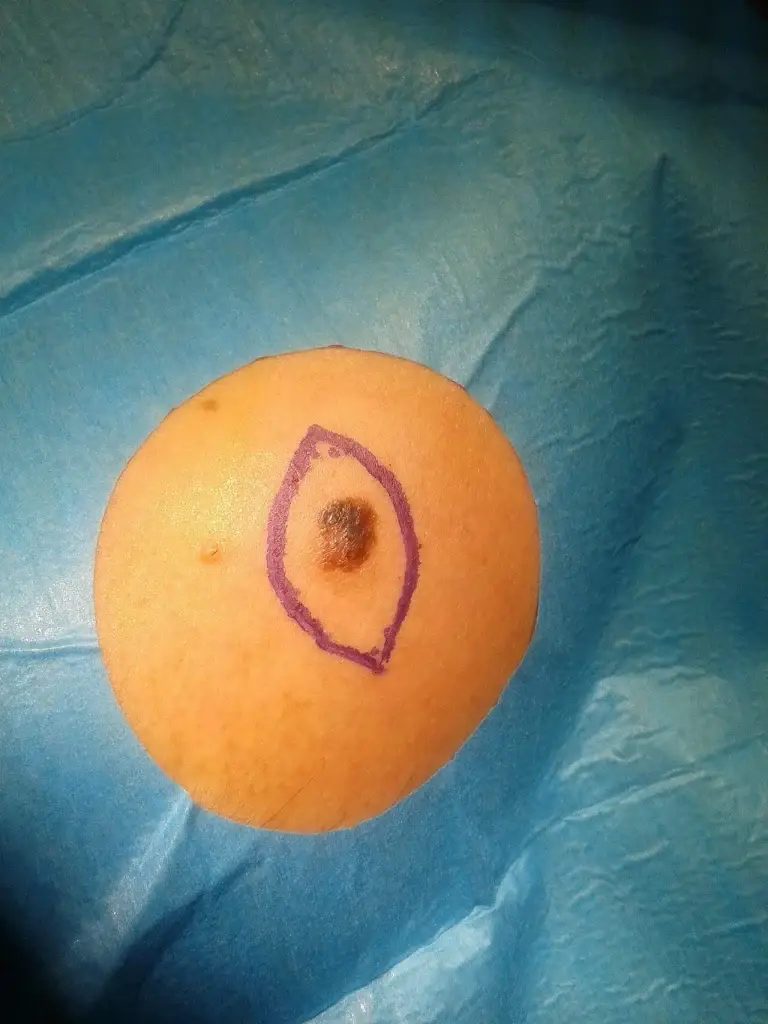 Photo: Nakos histopathology, CC BY-SA 4.0, via Wikimedia Commons
At a glance
About mole removal
The right technique for each mole
Moles may be removed because they look unusual or have changed, or simply because they catch on clothing or affect your appearance.
Before removal, Mr Kumar examines the mole to decide on the safest approach. Any mole that could be suspicious is removed completely and sent to the laboratory.
As a plastic surgeon, he plans the scar carefully so it heals as neatly as possible.
Mole removal can help with
- Moles that are changing or look unusual
- Moles that catch, rub or bleed
- Moles you would prefer not to have
- Confirming a diagnosis
Techniques
Two ways to remove a mole
Complete excision
The mole is removed with a small margin of skin and the wound stitched, leaving a fine line scar.
- Best for: moles that may be atypical, and to confirm a diagnosis
Shave excision
The mole is shaved flush with the skin and heals with a scab, usually leaving a small, flat mark.
- Best for: raised moles that are clearly benign
Watch & read
Everything you need to know, in one place
Patient guide
Mole removal: your patient guide
A detailed booklet written by Mr Kumar. It explains the procedure in depth, how to prepare, every risk and complication, and how to look after yourself afterwards.
Opens as a booklet you can flick through. Your copy is also given to you at consultation.
Your journey
Your step-by-step journey
Your journey starts the moment you get in touch. From your first enquiry to your final check-up, you deal with the same small team, and you will always feel listened to, informed and never rushed.
Get in touch
Call, email or send an enquiry, or ask your GP or dermatologist to refer you. We aim to see you quickly.
If you are worried about a skin cancer, tell us when you book so we can prioritise your appointment.
Assessment
Mr Kumar examines the area, reviews any biopsy results or scans, and explains your options clearly.
You will receive the plan in writing. Where relevant, your case is discussed with the skin cancer multidisciplinary team (MDT) that Mr Kumar leads.
Your procedure
The area is numbed with local anaesthetic, the mole is removed and a dressing applied. It takes 20 to 45 minutes and you go home straight away.
You will have clear wound-care instructions and a number to call if anything worries you.
Results
Anything removed is examined in the laboratory, usually within 2–3 weeks.
Mr Kumar goes through the results with you and explains what, if anything, needs to happen next.
Follow-up
A wound check and, where needed, regular skin checks to keep you well in the future.
You will also be shown how to check your own skin and what changes to look out for.
Recovery
Healing, step by step
Everyone heals at their own pace. This is a typical recovery, and Mr Kumar will give you a personal plan.
Keep the dressing clean and dry.
Stitches removed. Shaved areas form a scab; keep them moisturised.
Results discussed with you.
The scar continues to fade.
Patient reviews
In their own words
194 verified reviews on Doctify
90 verified reviews on Top Doctors
90 reviews on Top Doctors
Everything was explained to me clearly before procedure and the whole experience was totally professional. I would not hesitate in recommending this clinic to anyone.
Mr Kumar is a kind , considerate and highly professional surgeon. From my initial consultation I was reassured that I was in the care of a first rate physician for forthcoming skin surgery. The aftercare I have received is second to none and confirms to me that my opinion of Mr Kumar is well justified. …
Very thoughtful and insightful. Made me feel comfortable and I appreciate the time Dr Kumar took with my procedure and how he explained everything clearly.
Safety
Risks and staying safe
All surgery carries some risk. Mr Kumar will go through these with you in detail, and the patient guide covers them in full, so you can make an informed decision.
Possible risks
- Scarring
- Infection
- Bleeding
- Change in skin colour
- The mole growing back (more likely after shave removal)
- Thickened scarring (keloid), especially on the chest and shoulders
Lowering your risk
- Tell us about all medicines and supplements, especially blood thinners
- Stop smoking and vaping well before and after your procedure
- Follow your aftercare plan and attend every follow-up
- Call us at any time if something does not feel right
Fees
Guide price from£495
Self-pay consultations £250.
One package price. No hidden surprises.
If you go ahead, you receive a single package price covering your whole journey, so you know exactly what you are paying before you commit. It usually includes:
- Your surgeon’s fee
- Procedure room or theatre fees
- Laboratory analysis where needed
- Follow-up and wound check
- Support whenever you need it
- A clear written quote
FAQs
Your questions, answered
Will it leave a scar?
Any removal leaves a mark, but Mr Kumar aims for a fine, flat scar that fades over time.
Is every mole tested?
Yes, removed moles are sent for laboratory analysis.
Can I have more than one removed?
Usually, yes. Mr Kumar will discuss how many can be safely removed in one session.
Mole removal: what is the guide price?
The guide price starts from £495. Your final fee depends on your treatment plan and choice of hospital, and is confirmed in a written quote after consultation. Self-pay consultations cost £250.
Is it covered by insurance?
Treatment for a medical concern is usually covered by private medical insurance, subject to your policy. Your insurer will need Mr Kumar’s full name, Siva Kumar Veeramani, and GMC number 6114710. Self-pay is also available.
Ask the expert
Questions answered
Longer answers from Mr Kumar to questions patients often ask about this treatment.
Mole checks: when to worry
Most moles are harmless, but some changes need checking. A skin cancer specialist explains the ABCDE signs, who is at risk and when to see a doctor.
Read the answer →
BCC vs SCC: what is the difference between these skin cancers?
How basal cell carcinoma and squamous cell carcinoma differ, what each tends to look like, how serious they are and how they are treated.
Read the answer →
When does a mole need to be checked?
How quickly a new or changing mole should be seen, who needs routine skin checks, and what happens if a mole needs to come off.
Read the answer →
How do I get the best possible scar after surgery?
A surgeon’s simple scar care routine: when to start massage and moisturising, silicone gel or sheets, sun protection, and how IPL and CO2 laser can help after surgery.
Read the answer →
Locations
Where to have your mole removal in Kent, Surrey and Sussex
You are seen by Mr Siva Kumar at The Ü Clinic in Sevenoaks, Kent, or The Ü Clinic in Oxted, Surrey. If you need a larger procedure, it can be done at one of his partner hospitals: The McIndoe Centre in East Grinstead, West Sussex, KIMS Hospital in Maidstone, or North Downs Hospital in Caterham. See all of Mr Siva Kumar's clinic and hospital locations.
Both clinics are within easy reach of Tunbridge Wells, Tonbridge, West Malling, Westerham, Swanley, Dartford, Gravesend, Orpington, Bromley, Redhill, Reigate, Caterham, Coulsdon, Purley and Croydon. KIMS Hospital in Maidstone is close to Rochester, Chatham, Gillingham, Aylesford and Ashford, and The McIndoe Centre in East Grinstead is close to Crawley, Horley, Haywards Heath and Edenbridge. Patients also travel from across Sussex, including Brighton, Worthing, Horsham, Eastbourne, Hastings and Crowborough.
Mole removal cost: guide prices start from £495. Your fee is confirmed in a written quote after your consultation. Read the full mole removal cost guide.
Thinking about mole removal?
Start with an unhurried consultation with Mr Siva Kumar at The Ü Clinic in Sevenoaks or Oxted. Self-pay consultations cost £250.