Treatments / Skin / Scar correction
Scar Revision Surgery in Kent, Surrey, Sussex and London
Finer, flatter, more comfortable scars
Scar revision surgery with Mr Siva Kumar improves scars from operations, caesarean sections and injuries, including raised, stretched and sunken scars, with CO2 laser where it helps.
At a glance
About scar revision
Improving scars, not erasing them
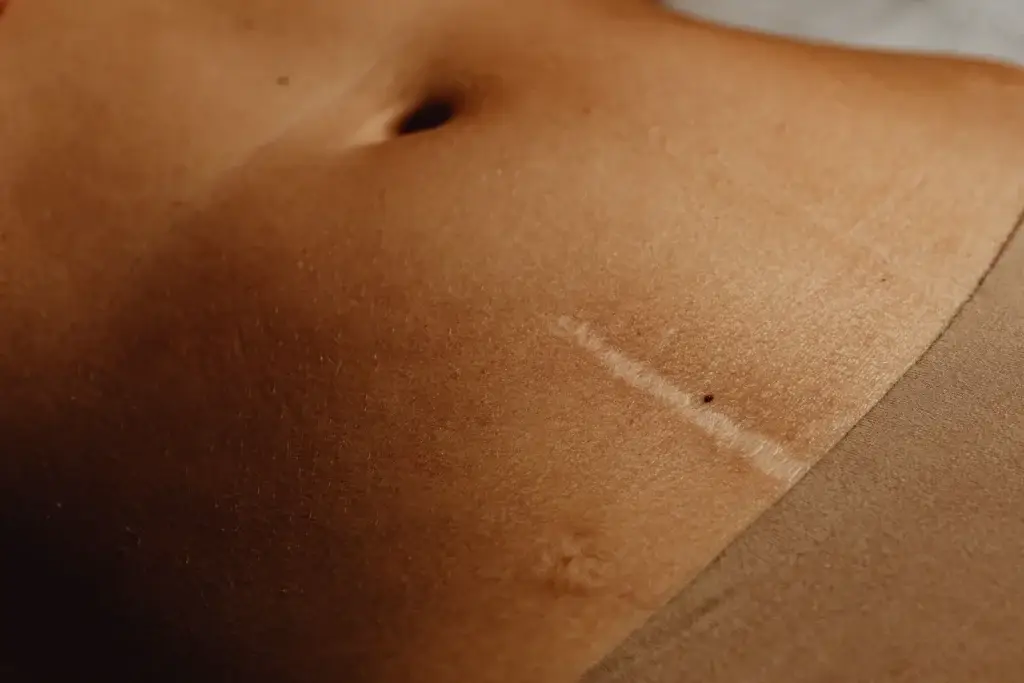
Every operation and injury leaves a scar. Most fade to a fine line, but some heal wide, raised, tight, sunken or puckered, and can be uncomfortable or knock your confidence.
Scar revision surgery removes the old scar and rejoins the skin carefully in layers, so the new scar heals finer and flatter. Where a scar sits against the natural lines of the skin or pulls tight, Mr Kumar can change its direction or release it with a Z-plasty or W-plasty.
For caesarean section scars, revision can also remove the overhang of skin above the scar, often called a shelf. Sunken (atrophic) scars can be released from the tissue beneath and lifted, and CO2 laser can smooth the surface and blend the colour, on its own or a few months after surgery.
Scars cannot be removed completely, but they can often be made much less noticeable.
Scar revision can help with
- Wide or stretched surgical scars
- Caesarean section scars, including an overhang above the scar
- Raised (hypertrophic) scars
- Sunken (atrophic) scars and dents
- Tight scars that pull or restrict movement
- Scars that sit against the natural lines of the skin
What it won’t do
- Remove a scar completely
- Treat a keloid on its own: keloids need a combined approach
Options
Matched to your scar
Surgical scar revision
The old scar is removed and the skin rejoined carefully in layers, so it heals as a finer, flatter line.
- Best for: wide, stretched or poorly healed scars
Z-plasty and W-plasty
The scar is re-angled to sit in the natural lines of the skin, or broken into a less noticeable zigzag. This also releases scars that pull tight.
- Best for: tight scars and scars against the skin lines
Caesarean section scar revision
The old scar is removed together with any overhanging skin and fat above it, and closed in layers low in the bikini line.
- Best for: a C-section scar with an overhang or a tethered dip
Release of sunken scars
The scar is freed from the tissue that tethers it down, sometimes with a small amount of your own fat placed underneath to lift it.
- Best for: sunken, tethered (atrophic) scars
CO2 laser resurfacing
Laser smooths the surface, softens raised edges and blends the colour. It can be used on its own or a few months after revision to refine the result.
- Best for: uneven texture, raised edges and pink scars
- CO2 laser
Steroid injections and silicone
Injections flatten and soften raised, itchy scars, and silicone gel or sheets help them settle, often alongside surgery.
- Best for: raised (hypertrophic) scars
Watch & read
Everything you need to know, in one place
Patient guide
Scar correction: your patient guide
A detailed booklet written by Mr Kumar. It explains the procedure in depth, how to prepare, every risk and complication, and how to look after yourself afterwards.
Opens as a booklet you can flick through. Your copy is also given to you at consultation.
Your journey
Your step-by-step journey
Your journey starts the moment you get in touch. From your first enquiry to your final check-up, you deal with the same small team, and you will always feel listened to, informed and never rushed.
Get in touch
Call, email or send an enquiry. Our team replies promptly and personally, and finds a time and clinic that suit you.
There is no pressure and no sales script. Tell us a little about what prompted you to get in touch, and we will make sure your consultation is with the right person for you.
Consultation
An unhurried, face-to-face appointment with Mr Kumar himself, who will be your surgeon from start to finish.
He listens to what you would like to change, examines you, explains every option, including non-surgical ones and doing nothing, and gives you an honest view of the likely result.
Time to decide
You receive a written plan, a clear quote and your patient guide, then take as long as you need.
A second consultation is included before surgery, and there is a cooling-off period of at least two weeks. Bring someone with you, ask anything, and change your mind at any point.
Day of treatment
Most scar revisions are done under local anaesthetic as a day case and take 30 to 90 minutes. Larger revisions, such as a caesarean section scar with an overhang, may be done under general anaesthetic. You go home the same day.
He will see you beforehand to go through the plan and answer last-minute questions, and you will have clear instructions and a number to call once you go home.
Aftercare and follow-up
Reviews at each stage of your recovery, with support 24 hours a day whenever you need it.
Follow-up appointments are included in your package price, and continue until you have healed and are happy with how things have settled.
Recovery
Healing, step by step
Everyone heals at their own pace. This is a typical recovery, and Mr Kumar will give you a personal plan.
Mild soreness and swelling. Keep the dressing clean and dry.
Stitches removed, depending on where the scar is.
Start scar massage and silicone gel or sheets once the wound has healed. Avoid stretching the area.
Return to the gym and heavy lifting after a caesarean section scar revision.
The new scar matures, flattens and fades.
Patient reviews
In their own words
194 verified reviews on Doctify
90 verified reviews on Top Doctors
90 reviews on Top Doctors
Everything was explained to me clearly before procedure and the whole experience was totally professional. I would not hesitate in recommending this clinic to anyone.
Very thoughtful and insightful. Made me feel comfortable and I appreciate the time Dr Kumar took with my procedure and how he explained everything clearly.
Mr KUMAR made me feel at ease, always. Explained my Operation in detail. I will definitely recommend him. I’m very pleased with my outcome.
Safety
Risks and staying safe
All surgery carries some risk. Mr Kumar will go through these with you in detail, and the patient guide covers them in full, so you can make an informed decision.
Possible risks
- The scar not improving as hoped
- A thickened or raised scar
- Infection
- Bleeding
- The wound opening
- Numbness around the scar
- A change in skin colour
Lowering your risk
- Wait at least 12 months for a scar to mature before revision
- Protect the new scar from the sun for at least a year
- Tell us about all medicines and supplements, especially blood thinners
- Stop smoking and vaping well before and after your procedure
- Follow your aftercare plan and attend every follow-up
- Call us at any time if something does not feel right
Fees
Guide price from£599
Self-pay consultations £250.
One package price. No hidden surprises.
If you go ahead, you receive a single package price covering your whole journey, so you know exactly what you are paying before you commit. It usually includes:
- Your surgeon’s fee
- Procedure room or theatre fees
- Laboratory analysis where needed
- Follow-up and wound check
- Support whenever you need it
- A clear written quote
FAQs
Your questions, answered
When can a scar be revised?
Usually once it has matured, at least 12 months after the original surgery or injury. Raised scars can be treated with silicone or steroid injections sooner.
Will the new scar be smaller?
Often it is finer, flatter and less noticeable, but every scar is different. Mr Kumar will give you an honest view of what is realistic.
Can a caesarean section scar be revised?
Yes. The old scar can be removed along with any overhang above it, and closed carefully so the new scar sits low in the bikini line. If there is a lot of loose skin or the muscles have separated, a mini or full tummy tuck may be the better option.
What is the difference between a hypertrophic scar and a keloid?
A hypertrophic scar is raised but stays within the line of the original wound, and responds well to revision, injections and silicone. A keloid grows beyond the wound and needs a combined approach, as surgery alone can make it return.
Can laser be used instead of surgery?
For many scars, yes. CO2 laser smooths texture and blends colour without cutting. Surgery is better for wide, tight or overhanging scars, and the two are often combined.
Is scar revision covered by insurance?
If a scar is painful, tight or restricts movement, some insurers cover revision. Scars treated for appearance alone usually are not covered.
Scar correction: what is the guide price?
The guide price starts from £599. Your final fee depends on your treatment plan and choice of hospital, and is confirmed in a written quote after consultation. Self-pay consultations cost £250.
Locations
Where to have your scar correction in Kent, Surrey and Sussex
You are seen by Mr Siva Kumar at The Ü Clinic in Sevenoaks, Kent, or The Ü Clinic in Oxted, Surrey. If you need a larger procedure, it can be done at one of his partner hospitals: The McIndoe Centre in East Grinstead, West Sussex, KIMS Hospital in Maidstone, or North Downs Hospital in Caterham.
Both clinics are within easy reach of Tunbridge Wells, Tonbridge, West Malling, Westerham, Swanley, Dartford, Gravesend, Orpington, Bromley, Redhill, Reigate, Caterham, Coulsdon, Purley and Croydon. KIMS Hospital in Maidstone is close to Rochester, Chatham, Gillingham, Aylesford and Ashford, and The McIndoe Centre in East Grinstead is close to Crawley, Horley, Haywards Heath and Edenbridge.
Scar correction cost: guide prices start from £599. Your fee is confirmed in a written quote after your consultation. See all prices.
Thinking about scar correction?
Start with an unhurried consultation with Mr Siva Kumar at The Ü Clinic in Sevenoaks or Oxted. Self-pay consultations cost £250.