Treatments / Skin / Keloid treatment
Keloid Scar Treatment in Kent, Surrey, Sussex and London
Flattening keloids, and keeping them down
Keloid scar treatment with Mr Siva Kumar, combining steroid and 5-FU injections, CO2 laser, IPL and surgery where needed, for keloids on the ears, shoulders, chest and surgical scars.
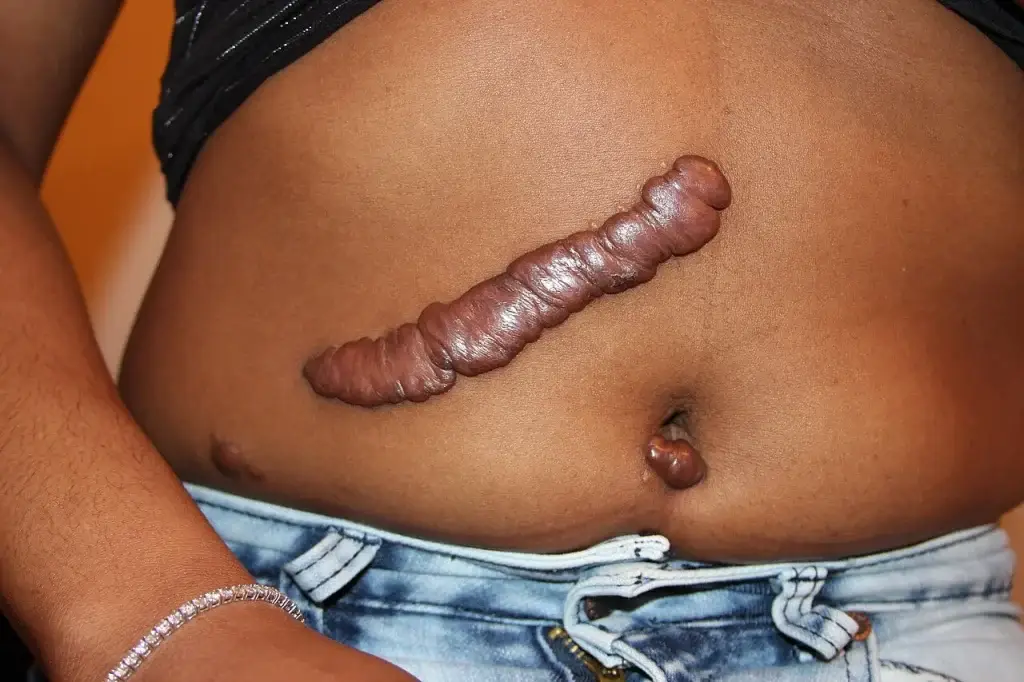 Photo: Htirgan, CC BY-SA 3.0, via Wikimedia Commons
At a glance
About keloid scars
Treating keloids the right way
A keloid is an overgrowth of scar tissue that spreads beyond the edges of the original wound. Keloids are raised, firm and often shiny, and can itch, hurt and keep growing. They are more common in darker skin and often run in families.
The most common places are the earlobes after piercing, the shoulders, the chest and upper back, and surgical scars, including caesarean section and chest scars.
Cutting a keloid out on its own often makes it come back larger, so Mr Kumar combines treatments: steroid injections to flatten and soften it, 5-FU injections for stubborn keloids, CO2 laser to soften the surface, IPL to reduce redness and, for larger or earlobe keloids, surgery with injections and pressure afterwards.
Treatment continues with regular reviews for at least a year, because catching any regrowth early makes it much easier to control.
Keloid treatment can help with
- Earlobe keloids after piercing
- Keloids on the shoulders, chest and upper back
- Keloids in surgical and caesarean section scars
- Itching, pain and tenderness
- Redness and raised scar tissue
What it won’t do
- Guarantee that a keloid will never come back
- Work well with surgery alone
Options
Matched to your keloid
Steroid injections
A steroid (triamcinolone) injected into the keloid flattens and softens it and eases itching. Injections are given every four to six weeks, usually over several sessions.
- Best for: most keloids, as the first treatment
5-FU injections
5-fluorouracil, often combined with steroid, slows the cells that build scar tissue. It helps keloids that respond poorly to steroid alone.
- Best for: stubborn or returning keloids
CO2 laser
Laser softens and flattens the surface of the keloid and can help injected medicines spread evenly. It is used alongside injections, never on its own.
- Best for: raised, firm keloids
- CO2 laser
IPL
Light energy reduces the redness of keloids and raised scars, with very little downtime.
- Best for: red or pink keloids
- IPL
Surgery combined with injections
For large or earlobe keloids, the keloid is removed and steroid injected at the time of surgery and afterwards, with pressure earrings or silicone to stop it returning.
- Best for: earlobe and larger keloids
Silicone and pressure
Silicone gel or sheets, and pressure earrings or garments, help flatten keloids and stop them coming back.
- Best for: all keloids, and prevention
Watch & read
Everything you need to know, in one place
Patient guide
Keloid scar treatment: your patient guide
A detailed booklet written by Mr Kumar. It explains the procedure in depth, how to prepare, every risk and complication, and how to look after yourself afterwards.
Opens as a booklet you can flick through. Your copy is also given to you at consultation.
Your journey
Your step-by-step journey
Your journey starts the moment you get in touch. From your first enquiry to your final check-up, you deal with the same small team, and you will always feel listened to, informed and never rushed.
Get in touch
Call, email or send an enquiry, and we will find a time that suits you.
Tell us what you would like to improve, and we will make sure the right treatment is discussed at your appointment.
Consultation
A face-to-face assessment with Mr Kumar, who explains the options, costs and any risks.
Prescription treatments such as anti-wrinkle injections are only given after a proper medical assessment. You never have to decide on the day.
Treatment
Injections take 15 to 30 minutes in clinic, with numbing cream first. Laser and IPL sessions take 20 to 45 minutes. Surgical removal is usually done under local anaesthetic as a day case.
You will know exactly what to expect, and receive aftercare advice and a number to call afterwards.
Review
A review appointment, usually after about two weeks, checks your result.
Any small adjustments can be made at this stage.
Maintenance
Advice on how long your result will last and when, if ever, to repeat treatment.
There is never any pressure to book further treatment.
Recovery
Healing, step by step
Everyone heals at their own pace. This is a typical recovery, and Mr Kumar will give you a personal plan.
The area may be tender for a day or two. You can carry on as normal straight away.
Stitches out at 7 to 14 days. Pressure earrings or silicone start once the wound has healed.
Review, with further injections until the keloid is flat.
Itching and redness settle.
Regular reviews to catch any regrowth early.
Safety
Risks and staying safe
All surgery carries some risk. Mr Kumar will go through these with you in detail, and the patient guide covers them in full, so you can make an informed decision.
Possible risks
- The keloid coming back
- Thinning or paler skin where steroid is injected
- Small visible blood vessels
- Temporary darkening or small sores where 5-FU is injected
- Discomfort during injections
- Infection after surgery
Lowering your risk
- If you form keloids, avoid new piercings, tattoos and unnecessary surgery
- 5-FU is not used in pregnancy or if you are trying to conceive
- Tell us about all medicines and supplements, especially blood thinners
- Stop smoking and vaping well before and after your procedure
- Follow your aftercare plan and attend every follow-up
- Call us at any time if something does not feel right
Fees
FeesPrice on consultation
Self-pay consultations £250.
One package price. No hidden surprises.
If you go ahead, you receive a single package price covering your whole journey, so you know exactly what you are paying before you commit. It usually includes:
- Your surgeon’s fee
- Procedure room or theatre fees
- Laboratory analysis where needed
- Follow-up and wound check
- Support whenever you need it
- A clear written quote
FAQs
Your questions, answered
Can keloids be removed?
Yes, but removal is always combined with injections, silicone or pressure, and follow-up, because surgery alone often makes a keloid return larger.
Do steroid injections for keloids hurt?
They sting, as keloid tissue is firm. Numbing cream and a very fine needle make them much more comfortable.
How many injections will I need?
Most keloids need several, every four to six weeks, until they are flat. Smaller, newer keloids usually need fewer.
What is 5-FU?
5-fluorouracil is a medicine that slows the cells that make scar tissue. Injected into a keloid, often with steroid, it helps keloids that have not responded to steroid alone.
Can I re-pierce my ear after an earlobe keloid?
If you are prone to keloids, Mr Kumar would advise against it, as a new piercing can trigger another keloid.
Is keloid treatment covered by insurance?
If a keloid is painful or itchy, some insurers cover treatment. Check with your insurer before booking.
Locations
Where to have your keloid treatment in Kent, Surrey and Sussex
You are seen by Mr Siva Kumar at The Ü Clinic in Sevenoaks, Kent, or The Ü Clinic in Oxted, Surrey. If you need a larger procedure, it can be done at one of his partner hospitals: The McIndoe Centre in East Grinstead, West Sussex, KIMS Hospital in Maidstone, or North Downs Hospital in Caterham.
Both clinics are within easy reach of Tunbridge Wells, Tonbridge, West Malling, Westerham, Swanley, Dartford, Gravesend, Orpington, Bromley, Redhill, Reigate, Caterham, Coulsdon, Purley and Croydon. KIMS Hospital in Maidstone is close to Rochester, Chatham, Gillingham, Aylesford and Ashford, and The McIndoe Centre in East Grinstead is close to Crawley, Horley, Haywards Heath and Edenbridge.
Keloid treatment cost: the price depends on your treatment plan and is confirmed in a written quote after your consultation. See all prices.
Thinking about keloid treatment?
Start with an unhurried consultation with Mr Siva Kumar at The Ü Clinic in Sevenoaks or Oxted. Self-pay consultations cost £250.