Treatments / Skin / Rhinophyma treatment
Rhinophyma Treatment in Kent, Surrey, Sussex and London
Reshaping the skin of the nose
Rhinophyma treatment with Mr Siva Kumar, mainly using a CO2 laser to remove the thickened skin layer by layer and reshape the nose, as part of a whole-skin plan for your rosacea.
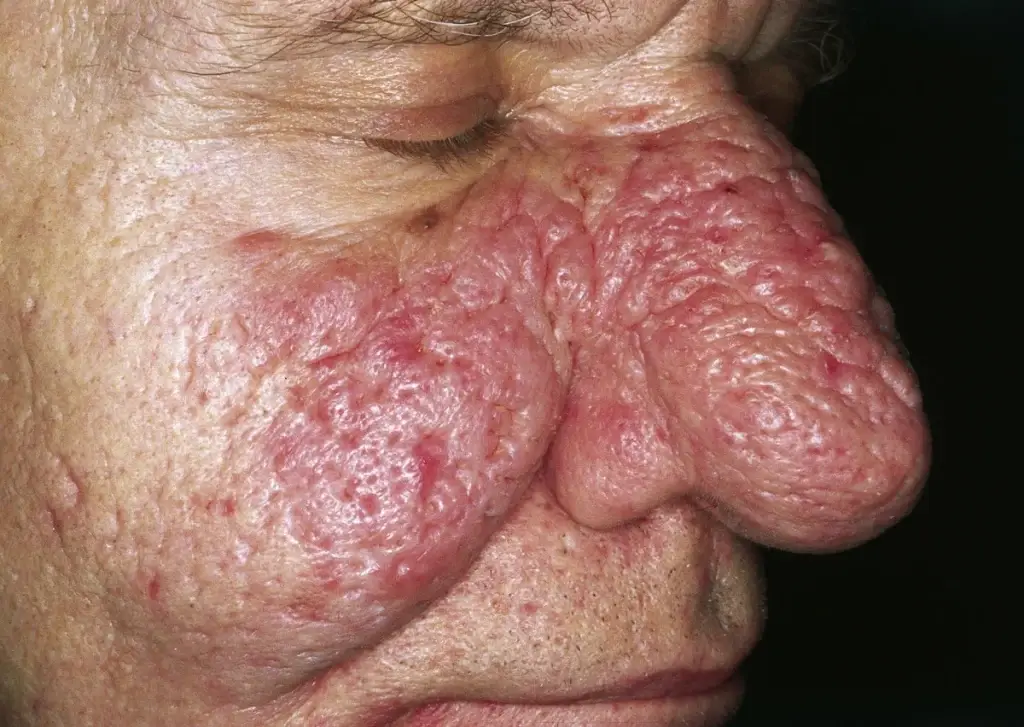 Photo: M. Sand, D. Sand, C. Thrandorf et al., CC BY 2.0, via Wikimedia Commons
At a glance
About rhinophyma
A treatable effect of rosacea
Rhinophyma is a thickening of the skin of the nose that develops in some people with long-standing rosacea, most often men over 50. The oil glands and the tissue around them overgrow, so the nose becomes enlarged, bumpy and red, with large pores.
Mr Kumar mainly treats rhinophyma with a CO2 laser. It vaporises the thickened tissue in very thin, controlled layers and seals small blood vessels as it goes, so he can sculpt the nose gradually back to a more natural shape. The deepest part of the skin is left in place, and new skin grows from it over the following weeks.
On occasion, for very thick or bulky areas, he uses loop cautery: a fine heated wire loop that shaves away tissue quickly while controlling bleeding. The CO2 laser is then often used to smooth and refine the surface.
If any area looks unusual, a small sample is sent to the laboratory first. Because rhinophyma is part of rosacea, Mr Kumar looks at your skin as a whole. IPL for redness and flushing, rosacea treatment from your GP or dermatologist, and simple daily skincare all help keep your skin calmer and reduce the chance of rhinophyma coming back.
Rhinophyma treatment can help with
- An enlarged or bulbous nose
- Thickened, bumpy skin
- Large pores and an uneven surface
- Blocked breathing through the nose, in severe cases
What it won’t do
- Cure rosacea, which may need ongoing treatment
- Remove all redness, although IPL can help with redness and thread veins once the skin has healed
- Guarantee the thickening never comes back
A whole-skin approach
Treating rhinophyma and the rosacea behind it
Rhinophyma is one part of rosacea, so the best and longest-lasting results come from treating the skin as a whole, not just the nose. Mr Kumar plans this with you, working with your GP or dermatologist where needed.
CO2 laser sculpting
Mr Kumar’s main technique. The laser removes the thickened tissue in thin, controlled layers and seals small blood vessels, so the nose can be reshaped precisely with little bleeding. Most people need one treatment; a small touch-up is occasionally helpful once everything has settled.
- Best for: most rhinophyma, from mild to severe
- CO2 laser
Loop cautery
Used on occasion for very thick or bulky areas. A fine heated wire loop shaves away tissue quickly while controlling bleeding, and the CO2 laser is often used afterwards to smooth the surface.
- Best for: very large, bulky growths
IPL for redness and flushing
A course of IPL, usually 3 to 5 sessions about 4 weeks apart, fades the persistent redness, flushing and thread veins of rosacea on the nose and cheeks. It starts once the skin has fully settled after laser treatment.
- Best for: redness, flushing and thread veins
- IPL
Rosacea creams and tablets
Creams such as ivermectin, metronidazole or azelaic acid, and sometimes tablets such as low-dose doxycycline, calm the spots and inflammation of rosacea and may slow early swelling. They can’t shrink thickening that has already formed, and are usually prescribed by your GP or dermatologist.
- Best for: spots, inflammation and long-term control
Gentle skincare and sun protection
A mild, fragrance-free cleanser and moisturiser, and a broad-spectrum SPF 30 or higher every day, protect sensitive skin and help prevent flare-ups. Sun protection matters even more while the treated skin heals.
- Best for: everyone with rosacea
Knowing your triggers
Common triggers include sun, heat, hot drinks, spicy food, alcohol and stress. A simple diary helps you spot and avoid your own. Alcohol doesn’t cause rhinophyma, but it can make flushing worse.
- Best for: fewer flare-ups
Watch & read
Everything you need to know, in one place
Patient guide
Rhinophyma treatment: your patient guide
A detailed booklet written by Mr Kumar. It explains the procedure in depth, how to prepare, every risk and complication, and how to look after yourself afterwards.
Opens as a booklet you can flick through. Your copy is also given to you at consultation.
Your journey
Your step-by-step journey
Your journey starts the moment you get in touch. From your first enquiry to your final check-up, you deal with the same small team, and you will always feel listened to, informed and never rushed.
Get in touch
Call, email or send an enquiry, or ask your GP or dermatologist to refer you. We aim to see you quickly.
If you are worried about a skin cancer, tell us when you book so we can prioritise your appointment.
Assessment
Mr Kumar examines the area, reviews any biopsy results or scans, and explains your options clearly.
You will receive the plan in writing. Where relevant, your case is discussed with the skin cancer multidisciplinary team (MDT) that Mr Kumar leads.
Your procedure
Treatment takes 45 to 90 minutes, depending on how much tissue needs removing. It is usually done under local anaesthetic, with sedation or a general anaesthetic for larger treatments, and your eyes are protected throughout. Afterwards the nose is covered with ointment and a light dressing, and you go home the same day.
You will have clear wound-care instructions and a number to call if anything worries you.
Results
Anything removed is examined in the laboratory, usually within 2–3 weeks.
Mr Kumar goes through the results with you and explains what, if anything, needs to happen next.
Follow-up
A wound check and, where needed, regular skin checks to keep you well in the future.
You will also be shown how to check your own skin and what changes to look out for.
Recovery
Healing, step by step
Everyone heals at their own pace. This is a typical recovery, and Mr Kumar will give you a personal plan.
The nose is raw and weeps, like a graze. Keep it moist with ointment and clean it gently as shown.
New skin forms over the treated area, and most people go back to work.
Return to normal activities. The new skin is pink and sensitive, so protect it from the sun.
Redness gradually fades and the final shape settles.
Safety
Risks and staying safe
All surgery carries some risk. Mr Kumar will go through these with you in detail, and the patient guide covers them in full, so you can make an informed decision.
Possible risks
- Bleeding, usually minor
- Infection
- Prolonged redness
- Scarring or uneven texture, more likely if treatment has to go deep
- Lighter patches of skin, which can be permanent
- Enlarged pores
- Rhinophyma coming back over time
Lowering your risk
- Tell Mr Kumar if you get cold sores, as antiviral tablets are given before laser treatment
- Tell Mr Kumar if you take, or have recently taken, isotretinoin (Roaccutane), as the timing of treatment may need planning
- Stop smoking if you can, as it slows healing
- Protect the healing skin from the sun for at least six months
- Tell us about all medicines and supplements, especially blood thinners
- Stop smoking and vaping well before and after your procedure
Fees
Guide price from£1,800
Self-pay consultations £250.
One package price. No hidden surprises.
If you go ahead, you receive a single package price covering your whole journey, so you know exactly what you are paying before you commit. It usually includes:
- Your surgeon’s fee
- Procedure room or theatre fees
- Laboratory analysis where needed
- Follow-up and wound check
- Support whenever you need it
- A clear written quote
FAQs
Your questions, answered
Why do you mainly use a CO2 laser?
It removes tissue in very thin, controlled layers and seals small blood vessels as it goes, so the nose can be sculpted precisely with little bleeding. That precision helps the skin heal well and look natural.
When is loop cautery used?
Occasionally, for very thick or bulky areas, where it removes tissue more quickly. The CO2 laser is then often used to smooth the surface.
Is rhinophyma caused by alcohol?
No. This is a common myth. Rhinophyma is linked to rosacea, not to drinking alcohol.
Is treatment painful?
You are numbed, sedated or asleep during the procedure. Afterwards the nose is sore for a few days, like a graze, and simple painkillers are usually enough.
How soon can I go back to work?
Usually after about two weeks, once new skin has formed. The nose stays pink for a few months, and make-up can usually be worn once it has healed.
Will it come back?
It can return slowly over years. Keeping rosacea under control helps, and a further touch-up treatment is possible if needed.
Can IPL help my rosacea as well?
Yes. Once your nose has healed, a course of IPL can fade the redness, flushing and thread veins of rosacea on the nose and cheeks. Mr Kumar can plan this with you as part of your overall treatment.
What can I do myself to keep rosacea under control?
Use gentle, fragrance-free skincare, wear SPF 30 or higher every day, and learn your own triggers, such as sun, heat, spicy food, alcohol or stress. Keep using any rosacea treatment your GP or dermatologist prescribes.
Is it covered by insurance?
Sometimes, particularly if your breathing is affected. Check with your insurer before booking.
Rhinophyma treatment: what is the guide price?
The guide price starts from £1,800. Your final fee depends on your treatment plan and choice of hospital, and is confirmed in a written quote after consultation. Self-pay consultations cost £250.
Ask the expert
Questions answered
Longer answers from Mr Kumar to questions patients often ask about this treatment.
Locations
Where to have your rhinophyma treatment in Kent, Surrey and Sussex
You are seen by Mr Siva Kumar at The Ü Clinic in Sevenoaks, Kent, or The Ü Clinic in Oxted, Surrey. If you need a larger procedure, it can be done at one of his partner hospitals: The McIndoe Centre in East Grinstead, West Sussex, KIMS Hospital in Maidstone, or North Downs Hospital in Caterham. See all of Mr Siva Kumar's clinic and hospital locations.
Both clinics are within easy reach of Tunbridge Wells, Tonbridge, West Malling, Westerham, Swanley, Dartford, Gravesend, Orpington, Bromley, Redhill, Reigate, Caterham, Coulsdon, Purley and Croydon. KIMS Hospital in Maidstone is close to Rochester, Chatham, Gillingham, Aylesford and Ashford, and The McIndoe Centre in East Grinstead is close to Crawley, Horley, Haywards Heath and Edenbridge. Patients also travel from across Sussex, including Brighton, Worthing, Horsham, Eastbourne, Hastings and Crowborough.
Rhinophyma treatment cost: guide prices start from £1,800. Your fee is confirmed in a written quote after your consultation. See all prices.
Thinking about rhinophyma treatment?
Start with an unhurried consultation with Mr Siva Kumar at The Ü Clinic in Sevenoaks or Oxted. Self-pay consultations cost £250.