How do I get the best possible scar after surgery?
A surgeon’s simple scar care routine: when to start massage and moisturising, silicone gel or sheets, sun protection, and how IPL and CO2 laser can help after surgery.

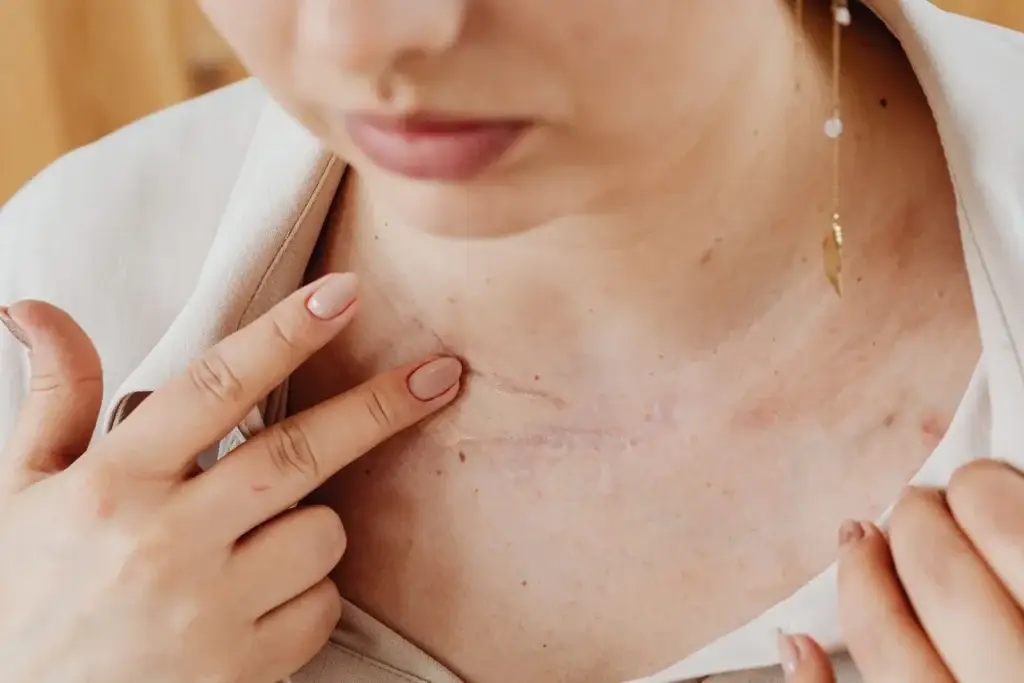
The short answer: most of the work happens in the first year, and the routine is simple. Look after the wound until it has healed. Then, from about two weeks after surgery, massage and moisturise the scar every day, use silicone gel or sheets, and protect it from the sun. A scar takes 12 to 18 months to mature. If it stays red, raised or itchy, IPL and CO2 laser in the months after surgery can help it settle, even if your operation was done elsewhere.
Every operation leaves a scar, and one of the questions I am asked most often is how to make it as neat as possible. How a scar heals depends partly on your skin, your genetics and where it is on your body, but there is a lot you can do yourself to minimise scarring after surgery. This is the simple routine I give my patients.
Your scar care routine at a glance
| When | What to do |
|---|---|
| The first two weeks | Look after the wound. Keep it clean and dry, and don’t pick at scabs or stitches. |
| From about two weeks | Once healed, massage and moisturise two to three times a day, and start silicone gel or sheets. |
| Every day for a year | Protect the scar from the sun with clothing or factor 50 sun cream. |
| Six weeks to three months | Expect some redness and itching. Get it checked if it is thickening or spreading. |
| 12 to 18 months | The scar matures, becoming flatter, softer and paler. |
Want a printable copy? Download my simple scar care guide (PDF, 8 pages), to keep or print.
Step 1: Look after the wound for the first two weeks
A wound that heals quickly and without problems gives the best scar. In the first two weeks:
- Keep your dressing clean and dry, and follow the advice you were given about showering and removing it.
- Don’t pick at scabs or stitches, and don’t soak the wound in a bath, swimming pool or hot tub until it has healed.
- Avoid heavy lifting, strenuous exercise and stretching the area. Tension on a healing wound can widen the scar.
- Don’t smoke or vape. Nicotine reduces the blood supply to the skin and slows healing.
- Eat well, with plenty of protein, fruit and vegetables.
Contact your surgical team straight away if the wound becomes increasingly red, hot, swollen or painful, leaks fluid or opens up, or if you develop a temperature.
Step 2: Massage and moisturise your scar
Scar massage is simple, free and one of the most effective things you can do. It softens and flattens the scar, eases tightness and itching, and helps it move freely over the tissues underneath.
When should I start massaging my scar after surgery?
Once the wound has fully healed: no scabs, no open areas and the stitches out. This is usually about two weeks after surgery, but follow your surgeon’s advice. Never massage an open wound.
How to massage a scar
- Use a plain, unperfumed moisturiser.
- Press firmly with your fingertips, enough to make the scar turn pale.
- Move in small circles along the whole length of the scar, then up and down and across it.
- Massage for about five minutes, two to three times a day.
- Keep going for at least three months, or until the scar is soft, flat and pale.
The same routine works for any surgical scar, including a caesarean section scar.
Can I put moisturiser or Bio-Oil on my scar?
Yes, once it has healed. A plain moisturiser keeps the scar supple and makes massage easier. Scar oils such as Bio-Oil are fine to use, but there is little evidence that they work better than a simple moisturiser, and vitamin E creams can irritate some people’s skin. It is the massage that makes the difference, more than the product.
Step 3: Use silicone gel or silicone sheets
Silicone is the best-proven product for scars, and it is recommended in international scar guidelines. It keeps the scar hydrated and helps it settle flatter, softer and less red.
- Silicone gel: apply a thin layer twice a day and let it dry. It is ideal for the face, joints and other areas that move, and sun cream or make-up can go on top once it is dry.
- Silicone sheets: wear them for at least 12 hours a day, ideally longer, and wash and reuse them as directed. They suit flat areas such as the tummy and chest.
Start once the wound has fully healed, usually about two weeks after surgery. Massage first, then apply the silicone. Use it every day for at least two to three months, and for longer if the scar is raised. Silicone gels and sheets are available from pharmacies without a prescription, and we can advise which to use.
Step 4: Protect your scar from the sun
New scars burn easily, and sunlight can darken them permanently. Until your scar has fully matured, usually for at least a year, keep it covered with clothing, or use factor 50 sun cream and reapply it regularly in the sun. Avoid sunbeds.
Step 5: Be patient. How long does a scar take to heal?
The skin closes in about two weeks, but a scar takes 12 to 18 months to mature. It often looks worse before it looks better:
- The first six weeks: pink and slightly firm.
- Six weeks to three months: often at its reddest, firmest and itchiest, as new collagen is laid down.
- Three to 12 months: gradually softer, flatter and paler.
- 12 to 18 months: mature. Most scars end up as a fine, pale line, although a scar never disappears completely.
How long do scars stay red after surgery?
Usually for several months. The redness fades gradually over the first year, and more slowly in some people and in some areas, such as the chest and shoulders.
Why is my scar itchy?
Itching is a normal part of healing, as the nerves in the skin recover and new collagen forms. Massage, moisturiser and silicone usually help. If the itching is severe, or the scar is also getting thicker, ask us to check it.
When should I get my scar checked?
Ask us to look at your scar if, after the first six to eight weeks, it is:
- getting thicker, harder or more raised (a hypertrophic scar)
- spreading beyond the edges of the original wound (a keloid scar)
- very itchy or painful, or pulling tight across a joint
- still very red after three months
Problems caught early are much easier to treat.
How IPL and CO2 laser can help after surgery
Many people think they should wait a year to see how a scar turns out. In fact, light and laser treatments often work best in the first months after surgery, while the scar is still active and remodelling.
IPL for red scars
IPL (intense pulsed light) targets the tiny blood vessels that make a new scar red. As the redness fades, the scar blends in with the surrounding skin, and red, raised scars often settle faster. Most people need a course of sessions about four weeks apart, with little or no downtime.
CO2 laser for raised or uneven scars
Fractional CO2 laser remodels the collagen within the scar. It flattens raised areas, smooths uneven texture, softens the edges and blends the colour, so the scar sits more naturally with the skin around it. Usually one to three sessions are needed, with a few days of redness after each.
When can laser treatment start?
Treatment can usually begin once the wound has fully healed, often from around six weeks after surgery. IPL and CO2 laser are often combined, IPL for the colour and CO2 for the texture, alongside your silicone and massage. Both need care in darker skin, because of the risk of pigment changes.
For thick, raised scars, steroid injections can help too. And if a scar has matured wide, tight or sunken, scar revision surgery can replace it with a finer line, usually once it is at least a year old.
Had your surgery elsewhere?
You don’t need to have had your operation with me. I am happy to assess scars after surgery anywhere, whether on the NHS, at another clinic or abroad, and to advise on the best way to improve them. For any problem with the wound itself in the first few weeks, please contact the team who carried out your operation first.
Quick questions
What is the best cream for scars after surgery?
Silicone gel has the best evidence. Use it alongside a plain, unperfumed moisturiser for massage.
Silicone gel or silicone sheets: which is better?
Both work. Gel suits the face and areas that move, and sheets suit flat areas. What matters most is using it every day for several months.
Can I put cream on a fresh surgical scar?
Not on an open wound. Wait until it has fully healed, with no scabs and the stitches out, usually about two weeks after surgery.
Do surgical scars ever disappear?
No, but most fade to a fine, flat, pale line that is hard to see. The aim of scar care is the neatest scar possible.
Does scar massage really work?
Yes. It softens and flattens scars, reduces tightness and eases itching, and it is one of the simplest things you can do.
Can you get rid of an old surgical scar?
Old scars can’t be removed completely, but CO2 laser, steroid injections and scar revision surgery can make them much less noticeable.
You can also read what to expect from the scars after specific operations: breast uplift scars, blepharoplasty scars and tummy tuck recovery week by week.
Next steps
If your scar is red, raised, itchy or not settling as you hoped, book a scar assessment at The Ü Clinic in Sevenoaks or Oxted, even if your surgery was done elsewhere. The earlier a scar is assessed, the more we can do.
You can also download my scar care guide (PDF) to keep or print.

Mr Siva Kumar Veeramani
MBBS, BMed.Sci (Hons), MRCS, MBA, FRCS (Plast.). Consultant Plastic, Reconstructive & Cosmetic Surgeon practising across London, Kent, Surrey and Sussex. GMC 6114710.
About Mr Siva Kumar →