When does a mole need to be checked?
How quickly a new or changing mole should be seen, how to get a mole checked in the UK on the NHS or privately, who needs routine skin checks, what happens at the appointment and what it costs.

The short answer: when to get a mole checked depends on what it is doing. Get a mole checked within the next two weeks if it is new, changing, bleeding or looks different from your other moles. Do not wait to see whether it settles. If you have lots of moles, a family history of melanoma, or you have had skin cancer before, a routine check once a year is sensible even when nothing has changed. If a mole has looked the same for years, keeping an eye on it with photos is fine.
Most moles are harmless, and most of the moles I see in clinic turn out to be nothing to worry about. The reason I would always rather see a mole early is simple. Melanoma caught early is usually cured with a small operation. Caught late, it is a very different conversation.
I have written about the warning signs themselves in Mole checks: when to worry, including the ABCDE checklist. This article is about timing: how quickly you need to act, how to get a mole checked in the UK, and how often you should have your skin checked.
“If you are asking yourself whether a mole needs checking, that is usually reason enough to have it checked. You do not need to be sure something is wrong first.”
Mr Siva Kumar, Consultant Plastic Surgeon
Should I get my mole checked? Try the one-minute self-check
Answer a few quick questions about your mole and your skin, and you will get an instant guide to how quickly it should be seen, based on the same warning signs doctors use. It takes about a minute, and nothing you choose is stored or sent anywhere.
Question 1 of 4
A guide only, not a diagnosis, and it cannot replace an examination. If you are worried about a mole, get it checked whatever the result. Nothing you choose is stored or sent anywhere.
How quickly should a mole be checked?
Get it checked within two weeks if it is new or changing
- It is changing. It is getting bigger, changing shape, or developing new colours, especially black, blue, red or white areas.
- It is new and you are an adult. New moles are common in childhood and early adulthood. A new mole after your mid-thirties deserves a look.
- It bleeds, crusts or itches without an obvious reason, such as catching it on clothing.
- It looks like the odd one out. Doctors call this the “ugly duckling” sign: a mole that looks different from all your others.
- It is raised, firm and growing. Some melanomas grow upwards as a firm lump rather than spreading out flat. They can be pink or red rather than dark, so do not be reassured by colour alone.
This is not an emergency, and you do not need to go to A&E. But it is not something to leave until after your next holiday either.
Is 6 mm the size when a mole needs checking?
You may have read that moles larger than 6 mm, about the width of the end of a pencil, are more concerning. Size is one of the things I look at, and it is the D in the ABCDE checklist. But it is not a hard cut-off. Plenty of large moles are harmless, and early melanomas can be smaller than 6 mm. A small mole that is changing worries me far more than a large one that has looked the same for twenty years.
How to get a mole checked in the UK
Through your GP and the NHS
Your GP is a good first port of call. GPs use a scoring system called the weighted seven-point checklist to decide who needs an urgent referral. It gives the most weight to changes in size, an irregular shape and an irregular colour, and also looks at size of 7 mm or more, inflammation, oozing and a change in sensation. If they are concerned, they can refer you on the urgent suspected cancer pathway, which aims to diagnose or rule out cancer within 28 days. Some GP practices also send dermatoscope photos to a specialist for advice.
Privately, with a specialist
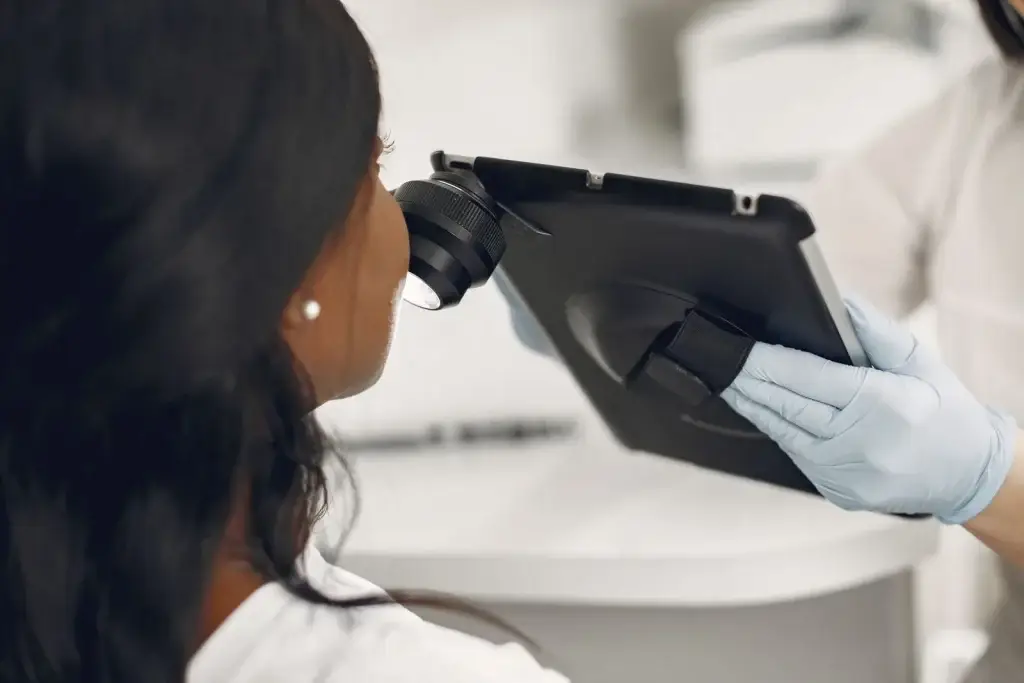
You can also see a specialist privately without waiting for a referral. At a mole check with me, I examine the mole with a dermatoscope, a handheld magnifier with a light that shows the structure beneath the surface of the skin. Most of the time I can reassure you there and then. If I have any doubt, I will recommend removing the mole so it can be examined under the microscope, often within days.
If you have private medical insurance, check with your insurer before you book, as many ask for a GP referral first.
What about pharmacies and apps?
Some pharmacies and apps offer photo-based mole screening. They can be a useful way to store and compare pictures of your moles over time, but they are not a substitute for an examination by a doctor. If you are worried about a mole, see someone who can examine it in person and remove it if needed.
What happens at a mole check?
A mole check usually takes 15 to 30 minutes. I ask about your skin history, sunburn, any family history of skin cancer and any changes you have noticed. Then I examine the mole or moles you are worried about, and, if you would like, the rest of your skin, using a dermatoscope. I will tell you what I think each mole is, and whether it needs anything doing. You leave knowing exactly what happens next.
“Most people leave a mole check reassured. For the few who need a mole removed, the important thing is that it has been caught, and we can act quickly.”
Mr Siva Kumar, Consultant Plastic Surgeon
When a routine mole check makes sense
Some people should have their skin checked regularly even when nothing seems to have changed. I usually suggest a check once a year if you:
- have more than 50 moles, or several unusual-looking (atypical) moles
- have a parent, brother or sister who has had melanoma
- have had a skin cancer before
- have fair skin that burns easily, or red or fair hair
- have had blistering sunburn, particularly as a child, or have used sunbeds
- take medicines that suppress the immune system, for example after an organ transplant
If you have already been treated for melanoma, your specialist team will give you a follow-up schedule of its own, and it is important to stick to it.
If you have a lot of moles, mole mapping is worth considering. Photographing your whole skin gives us a baseline, so at your next check we can see exactly which moles have changed rather than relying on memory.
How often should you check your own moles?
Once a month is a good rhythm for most people. Check in good light, with a full-length mirror and a hand mirror for your back, or ask someone at home to look for you. Do not forget your scalp, the soles of your feet, between your toes and under your nails. In men, melanoma is most common on the back. In women, it is most common on the legs.
The most useful thing you can do is take photos. A photo of a mole with a ruler or a coin next to it, taken every month or two, turns “I think it might have changed” into something we can actually compare.
What happens if a mole needs to come off?
Mole removal is usually a short procedure under local anaesthetic, done in clinic. The area is numbed, the mole is removed and the skin is closed with fine stitches. Most people go straight back to work. Stitches are usually removed after one to two weeks, depending on where the mole was.
Every mole I remove is sent to the laboratory, where a pathologist examines it under the microscope. That is the only way to be completely sure what it is. The result usually comes back within two to three weeks.
If the result shows a melanoma or another skin cancer, you are not on your own with it. I lead the skin cancer multidisciplinary team for Kent and the local Sussex area, and I will explain exactly what the result means and what, if anything, needs to happen next. You can read more on my melanoma treatment page, and about other common skin cancers in my guide to BCC vs SCC.
Can I just keep an eye on it?
For a mole that has looked the same for years and has none of the warning signs, yes. Watching it, ideally with photos, is perfectly reasonable.
For a mole that is new, changing or bleeding, no. You do not need to be sure something is wrong before you get it looked at.
Questions I’m often asked
Should I worry about a mole that itches?
An occasional itch is common and usually harmless, especially if your skin is dry. A mole that keeps itching, or itches along with other changes, should be checked.
Do moles change in pregnancy?
Moles can darken a little during pregnancy because of hormone changes. Even so, a mole that changes in size or shape, or looks different from the rest, should be checked. Pregnancy is not a reason to wait.
Should I get a mole on my face checked?
The same rules apply anywhere on the body. On the face, a spot that bleeds, crusts and does not heal may be a basal cell carcinoma rather than a mole, and is worth checking.
At what age should I start having my moles checked?
There is no set age. Routine checks matter most if you are in one of the higher-risk groups above. For everyone else, a monthly self-check and seeing a doctor about any change is enough.
Can a mole be checked by video?
Photos or a video consultation can help decide how soon you need to be seen, but they cannot replace examining a mole in person with a dermatoscope.
How much does a private mole check cost?
A private mole check with me costs £250, and mole removal starts from £495. You can see what is included on the mole removal cost page.
Next steps
If a mole is worrying you, please do not sit on it. You can book a mole check with me at The Ü Clinic in Sevenoaks or Oxted. If you think a mole has changed, please say so when you book.

Mr Siva Kumar Veeramani
MBBS, BMed.Sci (Hons), MRCS, MBA, FRCS (Plast.). Consultant Plastic, Reconstructive & Cosmetic Surgeon practising across London, Kent, Surrey and Sussex. GMC 6114710.
About Mr Siva Kumar →