Mole checks: when to worry about a mole
Most moles are harmless, but some changes need checking. A skin cancer specialist explains the ABCDE signs of melanoma, raised, dark and new moles, how to check your skin at home, and who is at higher risk.

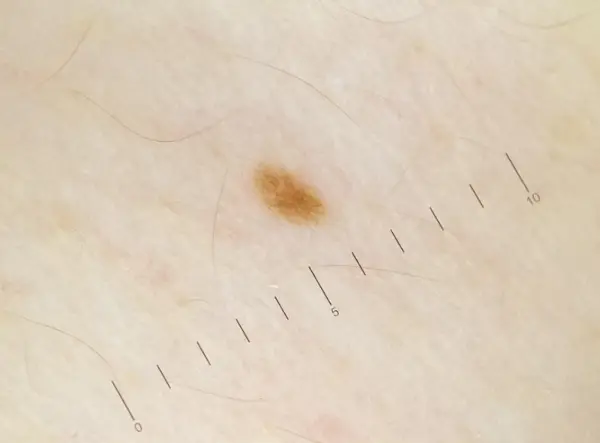
The short answer: when to worry about a mole comes down to one thing above all: change. A mole that is getting bigger, changing shape or colour, has an uneven edge or several colours, bleeds or itches, or looks different from all your other moles should be checked by a doctor within two weeks. The ABCDE checklist below makes it easier to spot the warning signs of melanoma. Most moles, and most changes, turn out to be harmless.
Most of us have moles, and the vast majority are completely harmless. But a change in a mole can occasionally be an early sign of skin cancer, including melanoma, and finding it early makes a real difference. As a plastic surgeon with a specialist interest in melanoma and skin cancer, here is my simple, practical advice on what to look out for.
“The patients I worry about are not the ones who come in with a mole that turns out to be nothing. They are the ones who waited months because they did not want to waste anyone’s time. You are never wasting my time.”
Mr Siva Kumar, Consultant Plastic Surgeon
What does a normal mole look like?
A typical, harmless mole is usually:
- round or oval, with a smooth, even edge
- one colour, often brown, tan or skin-coloured
- smaller than about 6 mm across, roughly the size of a pencil eraser
- stable, staying the same size, shape and colour over months and years
- similar to your other moles
The ABCDE checklist for moles
When checking a mole, it helps to remember ABCDE. It was designed to help people and doctors spot the features that make a melanoma more likely.
- A for Asymmetry: the two halves of the mole look different.
- B for Border: the edge is irregular, ragged, notched or blurred.
- C for Colour: the colour is uneven, or there are several shades such as brown, black, red, white or blue.
- D for Diameter: it is larger than about 6 mm across.
- E for Evolving: it is changing in size, shape, colour or height.
Of these, change is often the most important sign. A mole does not need to tick every box to be worth checking.
Other warning signs
- a new mole that appears in adulthood and keeps growing
- a mole that itches, bleeds, crusts or oozes without being injured
- a sore or spot that does not heal within a few weeks
- the “ugly duckling”: a mole that looks different from all your others
- a new dark streak under a fingernail or toenail that is not from an injury
- a firm, raised lump that is growing, even if it is pink, red or skin-coloured
That last point is important. Some melanomas, called nodular melanomas, grow upwards as a firm bump rather than spreading out flat, and they do not always follow the ABCDE rules. Doctors sometimes use a second checklist for these: Elevated, Firm and Growing. A small number of melanomas have little or no pigment at all, so a pink lump that keeps growing is worth showing to a doctor.
What size mole is concerning?
Size is one of the things I look at, but 6 mm is not a hard cut-off. Plenty of larger moles are harmless, and early melanomas can be smaller than 6 mm. A small mole that is changing worries me far more than a large one that has looked the same for twenty years. I have written separately about how quickly a mole needs to be checked.
“People often ask me to check the biggest mole they have. Usually it is the small one they had not noticed changing that I am more interested in.”
Mr Siva Kumar, Consultant Plastic Surgeon
Raised, dark, red or new moles: when to worry
- Raised moles are very common and usually harmless, particularly soft, skin-coloured moles on the face that have been there for years. A raised mole that is new, firm and growing should be checked.
- Black or very dark moles are not necessarily dangerous, especially if they are small, even and have been there a long time. A mole that has become darker, or has a patch of black in it, should be checked.
- Red spots are often cherry angiomas, small harmless clusters of blood vessels that become more common with age. A red or pink lump that is growing, bleeding or does not heal is worth checking, as it can occasionally be a skin cancer.
- New moles are normal in childhood and early adulthood. A new mole after your mid-thirties deserves a look, especially if it keeps growing.
- Moles on the scalp, back and soles of the feet are easy to miss. Ask someone to help you check areas you cannot see.
Things that look worrying but are usually harmless
Several common skin growths can look alarming but are almost always benign:
- Seborrhoeic keratoses: warty, “stuck-on” brown or black growths, very common from middle age. They can look dark and irregular, which is why they are often checked.
- Cherry angiomas: small, bright red spots.
- Skin tags: soft, small flaps of skin, often on the neck or in skin folds.
- Dermatofibromas: small, firm, brownish bumps, often on the legs, that dimple when pinched.
Even so, if you are not sure what something is, it is always worth having it looked at.
Who is at higher risk of melanoma?
Anyone can develop skin cancer, but your risk is higher if you:
- have fair skin that burns easily, light-coloured eyes, or red or fair hair
- have lots of moles, or large or unusual-looking moles
- have had sunburn, especially blistering sunburn as a child
- have used sunbeds
- have a personal or family history of skin cancer
- have a weakened immune system, for example after an organ transplant
How to check your moles at home
A quick self-check once a month is a good habit:
- Use a full-length mirror and a hand mirror in good light.
- Check everywhere, including your scalp, back, the backs of your legs, the soles of your feet, between your toes and under your nails.
- Ask a partner or family member to help with areas you cannot see.
- Take dated photos of any moles you want to keep an eye on, with a ruler or coin next to them, so changes are easier to spot.
Mole-checking apps can be a useful way to store and compare photos, but they are not reliable enough to tell you whether a mole is safe. If an app says a mole is low risk but you are still worried, get it checked.
What happens at a mole check?
At a mole check, I ask about your skin history and any changes you have noticed, then examine your skin, including any moles you are worried about. I use a dermatoscope, a special magnifying lens with a light, to see the structure of each mole in much more detail than the naked eye allows. Most of the time I can reassure you there and then. If a mole looks suspicious, I may recommend removing it, or taking a small sample (biopsy), so it can be examined under a microscope. If you have a lot of moles, mole mapping gives us a photographic baseline to compare against in future.
What if a mole needs removing?
Mole removal is usually a quick procedure under local anaesthetic:
- Complete excision: the mole is removed with a small margin of normal skin and the wound is closed with stitches. This is used when there is any concern about the mole, so it can be fully examined.
- Shave excision: for moles that are clearly benign, the mole can be shaved flush with the skin. It heals with a small scab and often leaves an inconspicuous mark.
If a skin cancer is diagnosed, I will explain the results and the next steps clearly, including any further treatment you need. You can read more about mole removal and melanoma treatment, and see guide prices on the mole removal cost page.
Protecting your skin
- Use a broad-spectrum sunscreen of SPF 30 or higher with good UVA protection, and reapply regularly.
- Seek shade in the middle of the day, especially between 11am and 3pm in the UK summer, and check the UV index.
- Wear a hat, sunglasses and clothing that covers your skin.
- Avoid sunbeds.
Questions I’m often asked
How often should I check my moles?
Once a month at home is a good rule. If you have many moles or a history of skin cancer, a regular professional check may also be recommended.
How quickly do cancerous moles change?
Most melanomas change gradually, over weeks to months. Nodular melanomas can grow more quickly. Any change you can notice over a few weeks or months is worth checking.
Are most changing moles cancerous?
No. Most changes turn out to be harmless, but because some are not, any change is worth checking.
Should I worry about my child’s moles?
New moles are very common in children, and melanoma in children is rare. Still, a mole that is growing quickly, bleeding or looks very different from the others should be checked.
Will mole removal leave a scar?
Any removal leaves a mark, but it is usually small and fades over time. As a plastic surgeon, I plan the removal to leave as neat a scar as possible.
Can I use my health insurance for a mole check?
Many policies cover specialist assessment of a suspicious mole. Check with your insurer, who will need my full name, Mr Siva Kumar Veeramani, and my GMC number, 6114710. Self-pay consultations are £250.
Next steps
If you have a mole that worries you, please do not wait. Book a mole check at one of my clinics, or speak to your GP.
Header image: dermatoscopic view of a benign mole (reticular naevus). Photo by Philipp Tschandl, CC BY-SA 4.0, via Wikimedia Commons.

Mr Siva Kumar Veeramani
MBBS, BMed.Sci (Hons), MRCS, MBA, FRCS (Plast.). Consultant Plastic, Reconstructive & Cosmetic Surgeon practising across London, Kent, Surrey and Sussex. GMC 6114710.
About Mr Siva Kumar →