Fat transfer vs breast implants: which is right for me?
An honest comparison of fat transfer and implants for breast enlargement: how much size each gives, how long results last, recovery, safety, breast screening and cost.

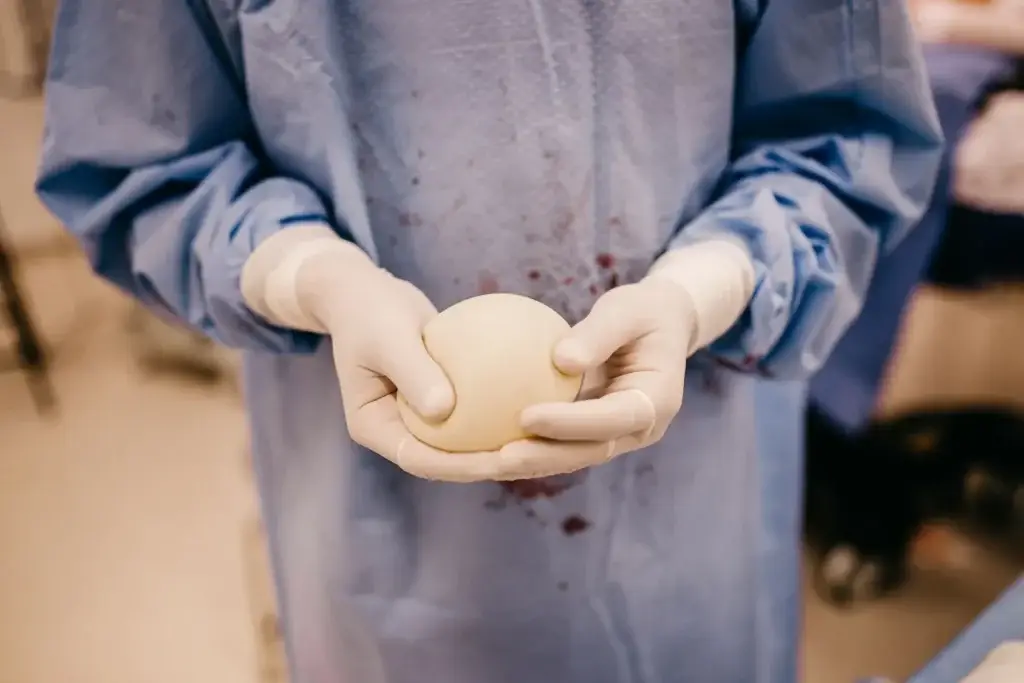
The short answer: when weighing up fat transfer vs breast implants, the biggest difference is size. Implants give a bigger, more predictable increase in one operation. Fat transfer gives a softer, more modest increase, usually up to about a cup size per session, using your own fat, with no implant and almost no scars. Which is right for you depends mainly on how much bigger you would like to be, and whether you have fat to spare.
Natural breast augmentation with fat has become much more popular in recent years, and I am asked about it more and more. It is a genuinely good option for the right person. But it is not a straight swap for implants, and the people who are happiest with either choice are the ones who understood the trade-offs before they started.
“The question I always start with is not ‘implants or fat?’ but ‘what would you like to look like?’ Once we know that, the right option usually becomes clear.”
Mr Siva Kumar, Consultant Plastic Surgeon
Fat transfer vs breast implants at a glance
| Fat transfer | Breast implants | |
|---|---|---|
| Size increase | Modest, up to about a cup per session | Larger and more predictable |
| Feel | Your own tissue, very natural | Natural with modern implants, but an implant can sometimes be felt, especially if you are slim |
| Scars | Tiny, a few millimetres | A short scar, usually in the fold beneath the breast |
| Operation | About two hours. Usually home the same day | About one and a half hours. One night in hospital |
| Back to work | About three to seven days | About a week |
| How long it lasts | Surviving fat is permanent, but changes with your weight | Many last 10 to 15 years or more, but further surgery may be needed one day |
| Bonus | Contouring where the fat is taken from | More fullness at the top of the breast |
| Guide price | From £7,000. Sometimes more than one session | From £6,500 |
How fat transfer to the breasts works
Fat is gently removed by liposuction from an area such as the tummy, hips or thighs. It is purified and then injected in tiny amounts, in many layers, throughout the breast, so that each droplet has a blood supply to survive. This is also called lipomodelling or fat grafting. You can read more about the technique in my guide to fat grafting and how long it lasts.
The result looks and feels natural, there is no implant, and the scars are a few millimetres long. Many people also like the contouring effect where the fat was taken from.
The trade-off is that some of the transferred fat is naturally reabsorbed over the first few months. The amount that survives varies, but around half to two-thirds is commonly quoted, which is why I slightly overfill. The fat that survives after three to six months is permanent and behaves like normal fat, so it will change if your weight changes. To reach your goal, more than one session is sometimes needed, usually at least three to six months apart.
How breast implants work
An implant is placed either partly under the chest muscle or above it, through a small incision, usually in the fold beneath the breast. I choose the implant within a narrow range that suits the width of your chest and what your skin can comfortably hold, rather than starting from a cup size. Crisalix 3D simulation can help you see likely results before deciding.
The increase in size is more predictable, and it is achieved in one operation. But implants are not lifetime devices. Many last 10 to 15 years or more, but you may need further surgery at some point. Every implant I use is recorded on the national Breast and Cosmetic Implant Registry, so you can be contacted if there is ever a safety concern.
Which is safer, fat transfer or implants?
Both are safe, well-established operations when performed by a properly trained surgeon in a registered hospital. They simply carry different risks.
Fat transfer avoids the risks of an implant. Its main risks are uneven absorption, which can leave the breasts slightly different, and small firm lumps where fat has not survived, called fat necrosis or oil cysts. These are usually harmless, but any new lump should always be checked. There are also the usual small risks of liposuction where the fat is taken from.
Implants carry risks including hardening of the scar tissue around the implant (capsular contracture), rupture, rippling, and the need for further surgery in the future. There is also a rare type of lymphoma called BIA-ALCL, linked mainly to textured implants, and some people report a range of symptoms described as breast implant illness, which is still being researched. I go through all of these openly at consultation.
“Neither option is risk-free, and nobody should tell you that one is. What matters is that the risks you are taking on are the right ones for the result you want.”
Mr Siva Kumar, Consultant Plastic Surgeon
Does fat transfer affect breast screening or cancer risk?
Research so far has not shown that fat transfer to the breasts increases the risk of breast cancer. It can occasionally cause small calcifications or oil cysts that show up on a mammogram, but radiologists are very experienced at recognising these. Always tell the radiographer that you have had fat transfer, and the same applies if you have implants, which can also affect how a mammogram is taken. Keep going to your breast screening appointments as normal.
What the results look like over time
The two options also behave quite differently in the months and years after surgery, which is worth knowing before you choose.
After fat transfer, the breasts look fuller straight away, partly because of swelling and the slight overfill. Over the next three months some of the fat is reabsorbed, and the size settles. By six months, what you see is what you keep. In the longer term, the result moves with your weight: if you gain weight, the breasts will usually grow a little, and if you lose weight, they will become smaller.
After implants, the breasts often sit high and feel firm at first. Over six to twelve weeks the implants “drop and fluff” as the tissues relax, giving a softer, more natural shape. The size stays much the same if your weight changes, but over many years the breast tissue around the implant will age and may droop, and an implant may eventually need replacing or removing.
Either way, the breasts continue to age naturally, and pregnancy, breastfeeding and weight change will all affect the result. That is why I usually suggest waiting until your weight is stable and your family is complete.
Who suits fat transfer?
- You would like a modest, natural change, perhaps half a cup to a cup.
- Your breasts are different sizes, or you have a tuberous breast shape that needs subtle reshaping.
- You want to improve the shape after previous surgery, or after implant removal.
- You have areas of fat you would be glad to lose, such as the tummy, hips or thighs.
It does not work if you are very slim and have no fat to spare, and it will not give a large increase in one go. It also will not lift breasts that have dropped.
Who suits breast implants?
- You want a more noticeable change in size, in a single operation.
- You would like more fullness at the top of the breast.
- You are slim, with little fat available to transfer.
- You would like the most predictable result in size.
You can read more on my breast augmentation page, and I have written a guide on how to choose a breast augmentation surgeon.
It does not have to be either or
The two can work together. Fat can be used to soften the edges of an implant, especially in slimmer women, which is sometimes called a hybrid or composite augmentation. And if your breasts are low as well as small, neither option on its own will lift them. A breast uplift, sometimes combined with implants or fat, may be what you need.
How much does fat transfer cost compared with implants in the UK?
Guide prices start from £6,500 for breast implants and £7,000 for fat transfer to the breasts. Fat transfer sometimes needs more than one session, which adds to the total. Implants may need replacing one day, which is a future cost to bear in mind. Your written quote will show exactly what is included.
Questions I’m often asked
How long does fat transfer to the breast last?
The fat that has survived at three to six months is permanent. It will grow or shrink with your weight, like the rest of your body fat, and the breasts will still age naturally.
Can fat transfer lift my breasts?
No. Fat adds volume and can improve fullness, but it cannot lift a breast that has dropped. That needs a breast uplift.
How long is recovery after fat transfer to the breasts?
Most people are back at desk work in three to seven days. The area where the fat was taken from is often more bruised and sore than the breasts, and you will wear a compression garment there for a few weeks.
Can I have fat transfer if I already have implants?
Yes. Fat can be added to soften or disguise the edges of implants, or used to restore shape if you decide to have your implants removed.
Next steps
At your consultation I will examine you, talk through what you would like to achieve and give you an honest view of which option will get you there. You can read more on my fat transfer page, or book a consultation at one of my clinics in Kent, Surrey and Sussex.

Mr Siva Kumar Veeramani
MBBS, BMed.Sci (Hons), MRCS, MBA, FRCS (Plast.). Consultant Plastic, Reconstructive & Cosmetic Surgeon practising across London, Kent, Surrey and Sussex. GMC 6114710.
About Mr Siva Kumar →