What is Mohs surgery, and when should you consider it?
What Mohs surgery is, how it removes skin cancer layer by layer, how successful it is, when to consider it over standard excision, and what recovery is like.
The short answer: Mohs surgery (also called Mohs micrographic surgery) removes skin cancer in thin layers, checking each one under the microscope while you wait. More skin is taken only where cancer is still seen, so it removes the whole cancer while saving as much healthy skin as possible. It has the lowest recurrence rate of any treatment for basal cell carcinoma (BCC), and it is most worth considering for skin cancers on the face, cancers that have come back, and cancers with edges that are hard to see. For most skin cancers elsewhere on the body, standard surgery works just as well.
When I tell someone they have a BCC on their nose or eyelid, the next question is almost always the same: “Will I look different afterwards?” It is a completely natural worry. Mohs surgery is one of the best answers we have to it, because it takes away only what needs to go. In this article I explain how Mohs works, what the research shows, who it suits, and what to expect on the day and in the weeks after.
What is Mohs surgery?
Mohs surgery is a specialised way of removing skin cancer. It is named after Dr Frederic Mohs, an American surgeon who developed the technique in the 1930s. Over the following decades it was refined into the method used today, in which thin layers of skin are frozen, cut and examined under the microscope on the same day.
The key difference from standard surgery is how the edges are checked. In a standard excision, the laboratory looks at sample slices through the removed skin, a bit like slicing a loaf of bread and checking some of the slices. In Mohs surgery, the whole outer edge and base of each layer is examined. That is why the cure rate is so high: very little of the edge goes unchecked.
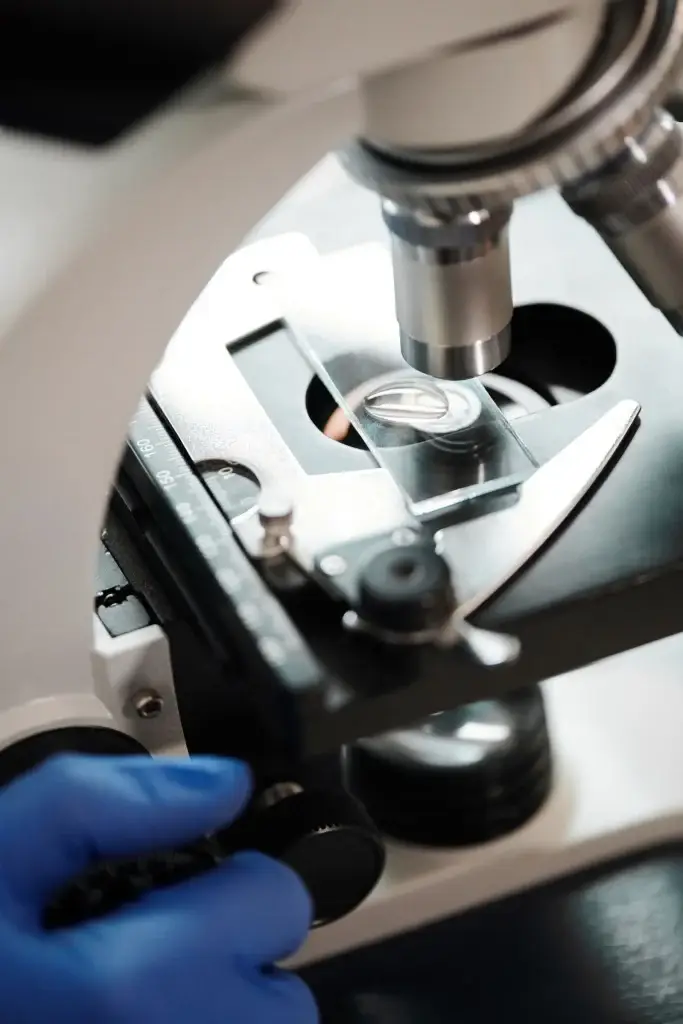
In the UK, Mohs surgery is carried out by dermatologists who have had specialist training in the technique. I work closely with a Mohs surgeon colleague. They remove the cancer, layer by layer, until it is clear. I then rebuild the area, usually on the same day, so that it heals as neatly as possible.
“The aim of Mohs is simple: take every bit of the cancer, and nothing more. On the face, every millimetre of healthy skin you keep makes the repair easier and the result better.”
Mr Siva Kumar, consultant plastic surgeon
How does Mohs surgery work, step by step?
- The area is numbed with local anaesthetic. You are awake throughout, and you shouldn’t feel pain after the first few seconds of the injection.
- The visible cancer is removed with a thin layer of skin around and beneath it.
- The layer is mapped. The surgeon marks it and draws a map, so that the exact position of every edge on your skin is known.
- The layer is checked under the microscope. It is frozen, cut into very thin sections and stained in an on-site laboratory. This usually takes around an hour, and you wait in between with a dressing on.
- More is removed only where needed. If cancer is still seen at any point on the edge, another thin layer is taken from that spot alone. This is repeated until the edges are clear.
- The wound is repaired. Once the cancer has gone, the wound is closed or reconstructed, usually the same day.
Most BCCs are cleared after one or two layers, but nobody can tell in advance how many will be needed. That is why it’s best to plan for a full day.
How successful is Mohs surgery?
Mohs surgery has the best cure rates of any treatment for BCC, which is why it is the treatment of choice for higher-risk cancers on the face.
- Primary BCC (treated for the first time): large reviews of Mohs surgery report a five-year cure rate of around 99%.
- Recurrent BCC (one that has come back after previous treatment): the cure rate with Mohs is still around 94 to 95%, which is considerably better than repeat standard surgery.
The best long-term evidence comes from a Dutch trial that randomly assigned people with facial BCC to either Mohs surgery or standard excision, then followed them for ten years. For BCCs that had come back after earlier treatment, the ten-year recurrence rate was 3.9% after Mohs compared with 13.5% after standard surgery, a clear difference. For first-time BCCs the gap was smaller (4.4% compared with 12.2%) and, in a trial of that size, not statistically certain. The same trial found that more than half of recurrences after first-time BCC appeared more than five years after treatment. That is one reason long-term skin checks matter.
A 2020 Cochrane review, which pooled the trials of BCC treatments, reached a similar conclusion: for high-risk primary BCC on the face, Mohs surgery probably leads to slightly fewer recurrences than standard excision.
Mohs surgery or standard excision: which is better?
For most skin cancers, standard excision works very well. The cancer is removed with a margin of healthy skin, usually 4 mm for a low-risk BCC, the wound is closed, and the tissue goes to the laboratory. The results come back in around two weeks. If any cancer is found at the edge, a second operation is needed.
Mohs comes into its own when:
- Every millimetre of skin counts. On the nose, eyelids, lips and ears, a standard margin can remove more tissue than necessary and make the repair more complex.
- The edges are hard to see. Some BCCs, especially the morphoeic or infiltrative types, spread under the skin in fine strands that are invisible to the eye.
- The cancer has come back. Recurrent cancers often sit among scar tissue, and their extent is hard to judge.
- You want the cancer confirmed as clear before the wound is closed. With Mohs, you leave knowing the result.
“I often say to patients: Mohs is not ‘better surgery’ for every skin cancer. It is the right tool for particular cancers in particular places. A small BCC on the back is usually best treated with a straightforward excision.”
Mr Siva Kumar
When should you consider Mohs surgery?
The British Association of Dermatologists’ guideline for BCC (2021) recommends Mohs surgery for high-risk BCCs. In practice, that usually means a cancer that is:
- on the central face, especially the nose, eyelids, lips or around the ears
- a BCC that has come back after surgery, radiotherapy or another treatment
- poorly defined, with edges that are hard to see
- an aggressive type of BCC on the biopsy, such as morphoeic, infiltrative or micronodular
- larger than about 2 cm, or in a place where saving tissue is especially important
Mohs is also used for some squamous cell carcinomas (SCCs), particularly on the face, and for some rarer skin cancers. If you are unsure of the difference between the two common types, my article on BCC vs SCC explains it.
Can Mohs surgery be used for melanoma?
Invasive melanoma is usually treated with a wide local excision, sometimes with a sentinel lymph node biopsy, not Mohs. For some early melanomas on the face, such as lentigo maligna, a related technique called staged excision may be used. Here each layer is checked using standard laboratory processing over a few days, before the wound is repaired.
My part: rebuilding the area after Mohs
Once your Mohs surgeon confirms the cancer is clear, I look at the wound and choose the repair that will give the best result for that part of your face. The aim is to restore both the shape and the way the area works, such as how an eyelid closes or how a nostril holds its shape, as well as how it looks. The main options are:
- Direct closure. The edges are brought together with fine stitches, leaving a single line, ideally hidden in a natural crease.
- A local flap. Nearby skin, which matches in colour and texture, is moved across to fill the gap. Flaps are often the best choice on the nose and cheek.
- A skin graft. A thin piece of skin is taken from elsewhere, often from in front of or behind the ear or from the neck, and placed over the wound.
- Healing on its own. Some small wounds in concave areas, such as near the inner corner of the eye, heal remarkably well without stitches.
Most repairs are done under local anaesthetic on the same day. Larger reconstructions, for example of the nose, are sometimes done in two stages a few weeks apart.
There is more detail, area by area, on my facial reconstruction after skin cancer page.
“The reconstruction is planned around you, not just the hole. I think about where your natural lines and creases are, how the skin moves when you smile, and how you’ll look in a year’s time, not just next week.”
Mr Siva Kumar
What should I expect on the day?
- Plan for most of the day. You wait while each layer is checked. Bring a book, your phone charger, and something to eat and drink.
- Eat a normal breakfast and take your usual medicines, unless you have been told otherwise. Don’t stop prescribed blood thinners without speaking to the team first.
- Wear comfortable clothes with a button-up top if the cancer is on your face, so you don’t need to pull anything over your head.
- Arrange a lift home, especially if the area is near your eye, as a dressing may cover it and you shouldn’t drive.
- Bring someone with you if you can. A long day is easier with company.
What is recovery like after Mohs surgery?
Most people are surprised by how manageable recovery is.
- Pain: usually mild, and paracetamol is often enough. Discomfort is greatest in the first 48 hours.
- Swelling and bruising: common, especially after surgery on the nose or forehead, when bruising can track down around the eyes. Sleeping propped up on an extra pillow for a few nights helps.
- Dressings: keep the first dressing dry for 24 to 48 hours, then follow the wound care instructions you are given.
- Stitches: usually removed after 5 to 7 days on the face, and 10 to 14 days elsewhere.
- Activity: avoid heavy lifting, bending and strenuous exercise for 1 to 2 weeks, as raising your blood pressure can cause bleeding.
- Alcohol and smoking: avoid alcohol for a couple of days. If you smoke, stopping before and after surgery makes a real difference to how well flaps and grafts heal.
Most people are back at desk-based work within a few days. The scar is red at first, then fades steadily over 6 to 12 months. My article on getting the best possible scar covers what you can do to help it.
Is Mohs surgery available on the NHS or with insurance?
On the NHS, Mohs surgery is offered in specialist skin cancer centres for people whose cancer meets the criteria for it, usually high-risk BCCs on the face. Waiting times vary across the country.
Privately, Mohs surgery is usually covered by medical insurance when it is the right treatment for your skin cancer, subject to your policy and pre-authorisation. If you are paying for yourself, the cost depends on the number of layers needed and the type of repair, so prices vary. You should always have a written quote before treatment. Ask for an itemised quote that shows the surgeon, Mohs laboratory, repair and follow-up fees separately.
Quick questions
Does Mohs surgery hurt?
The local anaesthetic stings for a few seconds. After that you should feel pressure but not pain. If you feel anything sharp, the surgeon can top up the anaesthetic at any time. Most people need only simple painkillers afterwards.
How long does Mohs surgery take?
Expect to be there for most of the day. Each layer takes around an hour to process, and the repair can take from 20 minutes to over an hour, depending on its size.
Will I have a scar after Mohs surgery?
Yes, any surgery leaves a scar. Because Mohs removes as little healthy skin as possible, and the repair is planned to follow the natural lines of your face, the scar is usually smaller and less noticeable than people expect. It keeps improving for up to a year.
Can I drive home after Mohs surgery?
It is best not to. You may have a bulky dressing, especially near the eye, and after a long day you are likely to be tired.
Can a BCC come back after Mohs surgery?
It is uncommon, but possible. Having one BCC also means you are more likely to develop another elsewhere, so regular skin checks remain important. Read more in when does a mole need to be checked?
Is Mohs surgery suitable if I’m older or take blood thinners?
Usually, yes. Because it is done under local anaesthetic, Mohs is suitable for most people, including those in their eighties and nineties and those who take blood thinners. Tell your team about all of your medicines beforehand.
Next steps
If you have been told you have a BCC on your face, or you would like to know whether Mohs surgery is right for you, you can read more on my BCC treatment and skin cancer surgery pages, or book a consultation at The Ü Clinic in Sevenoaks or Oxted.
Sources
- Nasr I, et al. British Association of Dermatologists guidelines for the management of adults with basal cell carcinoma 2021. British Journal of Dermatology 2021;185:899–920. doi:10.1111/bjd.20524
- van Loo E, et al. Surgical excision versus Mohs’ micrographic surgery for basal cell carcinoma of the face: a randomised clinical trial with 10 year follow-up. European Journal of Cancer 2014;50:3011–20. PubMed 25262378
- Thomson J, et al. Interventions for basal cell carcinoma of the skin. Cochrane Database of Systematic Reviews 2020. doi:10.1002/14651858.CD003412.pub3
- Rowe DE, Carroll RJ, Day CL. Long-term recurrence rates in previously untreated (primary) basal cell carcinoma: implications for patient follow-up. Journal of Dermatologic Surgery and Oncology 1989;15:315–28.
Mr Siva Kumar Veeramani
MBBS, BMed.Sci (Hons), MRCS, MBA, FRCS (Plast.). Consultant Plastic, Reconstructive & Cosmetic Surgeon practising across London, Kent, Surrey and Sussex. GMC 6114710.
About Mr Siva Kumar →