Private skin cancer surgery: why would you choose it?
Why people choose private skin cancer surgery for BCC, SCC and melanoma: a quicker date, your choice of hospital, one consultant throughout, the same national guidelines, and how to move back to NHS care.
The short answer: private skin cancer surgery gets you a quicker date, a hospital and time that suit you, and the same consultant from your first appointment to your results. It does not give you a different standard of cancer care. Private and NHS patients follow the same national guidelines, and their cases go to the same specialist team meeting. Going private also does not close the door on the NHS: you can move back at any point.
I’m often asked whether it’s worth having skin cancer treatment privately, and whether it means leaving the NHS behind. It doesn’t. I work in NHS skin cancer services as well as privately, and I lead the skin cancer multidisciplinary team for Kent and the local Sussex area, so I see both sides every week. What changes when you go private is how quickly things happen and how much of it you control.
Here’s what that looks like in practice for the operations I do most often: removing basal cell carcinoma (BCC), squamous cell carcinoma (SCC) and melanoma, and sentinel node biopsy for melanoma. If you’re not sure which of these you have, my guide to the difference between BCC and SCC is a good place to start.
“Going private changes how quickly things happen and who you see. It doesn’t change the standard of cancer care, and it doesn’t close the door on the NHS.”
Mr Siva Kumar, Consultant Plastic Surgeon
Speed matters when you have a cancer
Most skin cancers grow slowly, and a short wait is rarely a problem. But waiting is still hard. Anyone who has been told they have a cancer wants it out. I understand that.
Melanoma and some SCCs are different. They can spread, so I don’t like to leave them sitting. In the NHS they are referred on the urgent suspected cancer pathway. The national standards in England are that you should be told whether or not you have cancer within 28 days of an urgent referral, and start treatment within 62 days of it. Many people are seen well within that, but waiting times vary by area and time of year, and I’d rather not quote numbers that change.
BCCs are where waits tend to be longest. Because they grow slowly and very rarely spread, NICE guidance usually recommends a routine referral rather than an urgent one, and BCCs are not covered by the national cancer waiting time standards. That is clinically sensible, but it can mean living with a known cancer on your face for months. It’s one of the most common reasons people come to see me privately.
Privately, I can usually see you within days, plan your surgery within a week or two, and go through your results with you soon after. If you’ve been waiting and worrying, speed is often the main reason people ring me.
Choose where and when
This is the part people don’t expect to matter, and then it matters a great deal.
I operate at several hospitals across Kent, Surrey and Sussex, including the McIndoe Centre in East Grinstead, KIMS Hospital in Maidstone and North Downs Private Hospital in Caterham, and I hold clinics in Sevenoaks and Oxted. You can pick the one closest to home (see all my clinic locations). That’s a lot easier if you’re driving yourself, or if a relative has to bring you and collect you.
You also choose the day. If you’re self-employed, have children to get to school, or look after someone at home, you can book around that rather than around a date you can’t change. It sounds small. For many of my patients it takes a lot of stress away at a stressful time.
The same guidelines, the same team discussion
I want to be clear on this, because it’s the question I hear most. Private patients are not treated differently from a clinical point of view.
Every skin cancer I treat follows the same national guidelines as NHS care, including NICE guidance on how much healthy skin to remove around a melanoma and who should be offered further tests. Melanomas, higher-risk SCCs and anything unexpected are discussed at the skin cancer multidisciplinary team (MDT) meeting, where surgeons, dermatologists, oncologists, pathologists, radiologists and specialist nurses agree the plan together. Because I lead that MDT, I know how thorough the process is. Your pathology report is reviewed, your margins are checked, and decisions about further treatment are made by a group of specialists, not by me alone.
Your consultant does the operation
In the NHS you are looked after by a consultant-led team. That team includes surgeons in training, and parts of your care, including the operation, may be carried out by one of them under supervision. That is how the next generation of surgeons learns, and I’ve trained many of them myself. But some people would rather know exactly who will be doing their operation, especially when it’s on their face, their eyelid or their lymph nodes.
Privately, I see you in clinic, I plan your surgery, I do the operation, and I see you afterwards to go through your results. One person from beginning to end. You don’t have to repeat your story to someone new at each visit, and you always know who to call.
This matters most when the cancer sits somewhere difficult. Skin cancers on the nose, ears, lips and around the eyes need careful planning to take the cancer out completely and keep the repair looking natural. Reconstruction is what I do every day, so I plan the removal and the repair together, whether that’s a simple line of stitches, a local flap or a skin graft. For some facial BCCs, Mohs surgery is the better option, and I can arrange that and then do the repair myself. Afterwards, there’s plenty you can do to help your scar settle well.
“On the face, taking the cancer out is only half the job. I plan the removal and the repair together, because both decide how you’ll look afterwards.”
Mr Siva Kumar, Consultant Plastic Surgeon
What about sentinel node biopsy?
Sentinel node biopsy is offered to some people with melanoma. It checks the first lymph node (or nodes) that the melanoma would drain to, to see whether any cancer cells have travelled there. It’s done together with the wider excision around the melanoma scar, usually as a day case under general anaesthetic.
It involves several teams, including nuclear medicine for the scan beforehand and pathology afterwards, and good coordination makes a real difference. Having it done promptly, with one surgeon overseeing every step, is a big help when you’re already anxious about the result. I explain the whole process in what a sentinel lymph node biopsy for melanoma involves.
Going private does not stop you using the NHS
This is the point I most want you to take away. Having your surgery privately does not count against you in the NHS. You keep every right to NHS care, and you can move back at any stage.
It’s very common for patients to have their operation with me and then have further treatment or long-term follow-up in the NHS. That’s especially true after a sentinel node biopsy. If your result is positive, you may need to see an oncologist for further treatment or regular scans, and much of that specialist care is centred in NHS cancer centres.
A few practical points, so there are no surprises:
- You’ll need a referral. I can refer you to the NHS skin cancer service or write to your GP, and send all your notes and pathology results.
- You won’t jump the queue, and you won’t be penalised. The NHS team will see you according to how urgent your situation is, exactly as they would anyone else, and cancer referrals are dealt with urgently.
- The NHS team may want to see you themselves before taking over your care. That’s normal and sensible.
- I stay involved for as long as you’d like me to be.
Think of it as using the private route for the part where speed and continuity help most, and the NHS for the part where its specialist services are strongest. Whichever route you’re on, it’s worth learning how to check your lymph nodes and what to look for in your moles between appointments.
A calmer setting
I won’t pretend this is the most important reason, but it counts. Private hospitals are usually quieter, and you’ll normally have your own room and bathroom, flexible visiting and appointment times that work for you. If you’re nervous about hospitals, that atmosphere really helps, and your family can stay close.
Most BCC and SCC operations don’t need a hospital stay at all. They’re done under local anaesthetic and you go home the same day. If you’re anxious about being awake, local anaesthetic with sedation can make it much easier.
What does it cost, and will insurance cover it?
If you’re paying for yourself, removing a straightforward skin cancer with me starts from £850, plus £160 for the laboratory analysis (histology). A more complex repair, such as a local flap or skin graft after removing a BCC, starts from £1,950 plus histology. A first consultation is £250. My team will give you a clear, written price before you commit to anything.
If you have private medical insurance, skin cancer treatment is usually covered, but check your policy first. Some insurers need a GP referral, most need pre-authorisation before your operation, and an outpatient limit or excess can affect what you pay.
Is it right for everyone?
No, and I’ll tell you straight if it isn’t. A few honest points:
- Cost. Private care has to be paid for, either through insurance or by you. NHS treatment is free, and the NHS treats skin cancer well.
- Complex cases. Some patients need treatments or services that are best delivered in an NHS specialist cancer centre. If that’s you, I’ll say so and arrange it.
- An NHS date that’s coming up soon is often the simplest option. Going private makes most sense when the wait, the location or seeing the same consultant matters to you.
- Don’t wait to be seen. If you have a mole or a patch of skin that is changing, bleeding or not healing, the most important thing is to get it checked quickly, by whichever route is quickest for you. My guide on when a mole needs to be checked explains how urgent it is and the routes available.
“If a mole is changing, bleeding or not healing, get it checked by whichever route is quickest. The best route is the one that gets you seen soonest.”
Mr Siva Kumar, Consultant Plastic Surgeon
Questions I’m often asked
Is private skin cancer treatment better than NHS treatment?
Not in terms of the cancer care itself. Both follow the same national guidelines and the same specialist team reviews. Going private gives you speed, your choice of hospital and date, and the same consultant throughout.
How quickly can I be seen privately?
Usually within days. Surgery can often be planned within a week or two of your consultation, depending on the type of cancer and the operation you need.
Do I need a GP referral to see you privately?
Not if you’re paying for yourself: you can book directly. Many insurers ask for a GP referral before they will authorise treatment, so check with them first.
Can I go back to the NHS after private surgery?
Yes. You keep your full right to NHS care. I can refer you back with your notes and pathology, and the NHS team will see you according to clinical urgency, as they would anyone else.
Will my case still be discussed by a specialist team?
Yes. Melanomas, higher-risk SCCs and anything unexpected are discussed at the skin cancer multidisciplinary team meeting, exactly as they would be in the NHS.
Is skin cancer surgery covered by health insurance?
Usually, yes, because it is a medical condition. Check whether you need a GP referral, get pre-authorisation before surgery, and ask about any outpatient limit or excess.
Is the operation done under local anaesthetic?
Most BCC and SCC removals are done under local anaesthetic, and you go home the same day. Sentinel node biopsy and larger repairs are usually done under general anaesthetic, often still as a day case.
How much does private skin cancer removal cost?
With me, from £850 plus £160 for histology for a straightforward removal with stitches, and from £1,950 plus histology for a BCC that needs a flap or graft. A first consultation is £250, and you’ll get a written price before you go ahead.
Thinking about private skin cancer surgery?
Come and see me. We’ll look at your skin, go through your options and agree a plan at a pace that suits you. You can ask me anything, and you can change your mind.
You can book a skin cancer consultation in Sevenoaks or Oxted, or by video call. There’s more about the operations themselves on my skin cancer surgery page. If you’d like a full skin check first, see mole checks and AI mole mapping. You can also read more about me and my experience.
Sources
- NICE. Suspected cancer: recognition and referral (NG12).
- NICE. Melanoma: assessment and management (NG14).
- NHS England. National cancer waiting times monitoring dataset guidance.
- NHS England. National elective access policy (section on patients moving between NHS and private care).
- Cancer Research UK. Private cancer treatment.
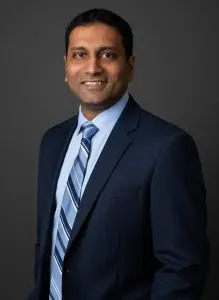
Mr Siva Kumar Veeramani
MBBS, BMed.Sci (Hons), MRCS, MBA, FRCS (Plast.). Consultant Plastic, Reconstructive & Cosmetic Surgeon practising across London, Kent, Surrey and Sussex. GMC 6114710.
About Mr Siva Kumar →